

Murong Qingyi in the Novel vs. the Drama: Victim or Symbol of Feudal Power?
One of the most significant changes in Overdo is the portrayal of Murong Qingyi. Although the character shares the same name in both versions, his role in the story is fundamentally different.
The television adaptation presents him as a man burdened by tragedy, while the novel portrays him as someone shaped—and empowered—by the very social system the story seeks to criticize.
Support Layar Hijau
Layar Hijau is an independent media outlet dedicated to sharing news and stories about the Asian dramas you love. If you enjoy our content, your support helps us keep going and bring more stories to fellow drama fans.
Every bit of support means a lot to us. Thank you for reading, following, and being part of Layar Hijau's journey.
For supporters in Indonesia

For international supporters

For more information, click here.
Murong Qingyi in the Drama
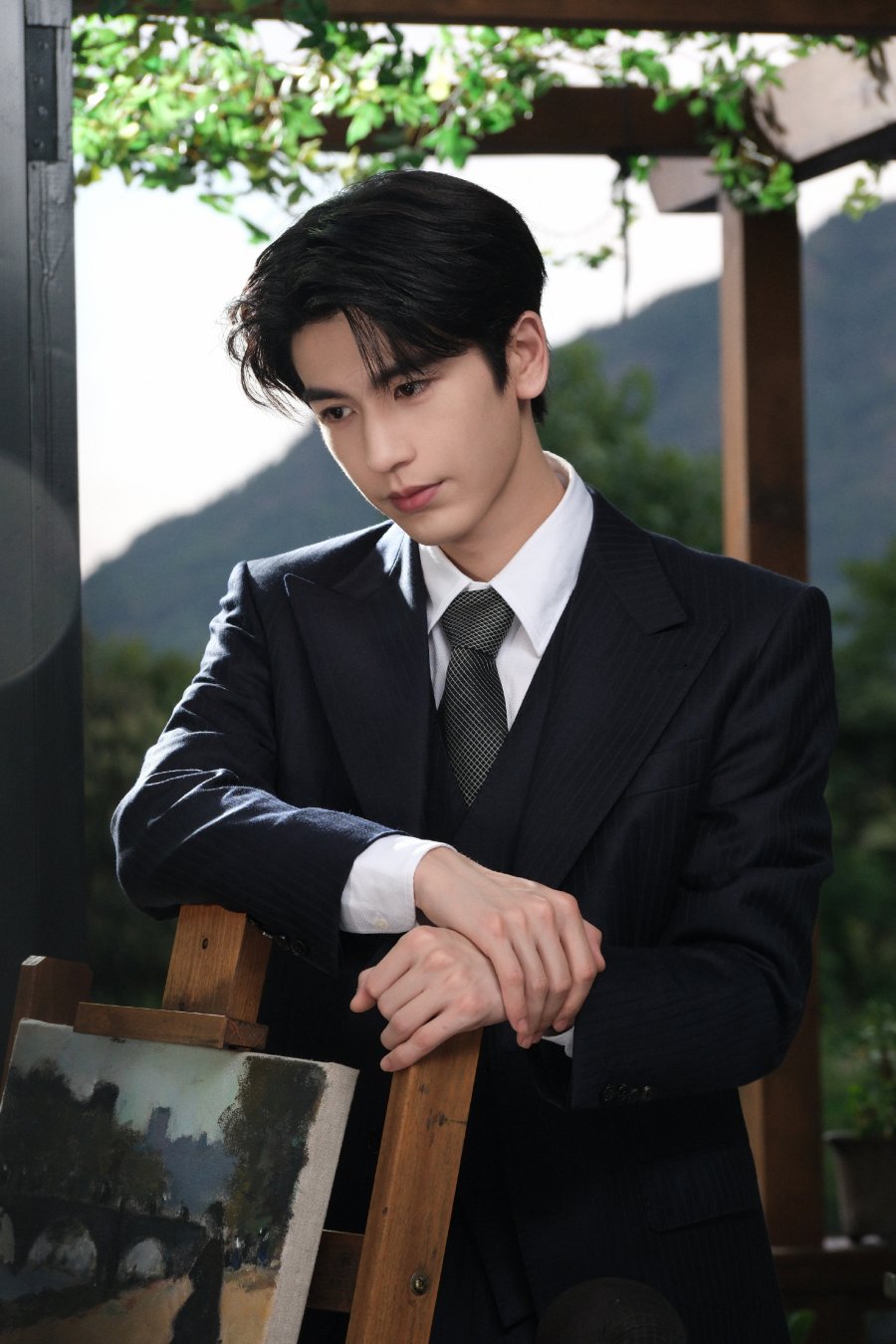
In Overdo, Murong Qingyi is a deeply sympathetic protagonist.
His life is defined by loss from the moment he is born. An identity swap separates him from his biological family, he loses his father in a tragic accident connected to his own past, and his birth mother rejects him, believing he brings misfortune. Forced out of both the Murong and Li families, Qingyi experiences abandonment, loneliness, and even homelessness before Ren Susu becomes the one person who brings warmth back into his life.
When they reunite as adults, Qingyi sees Susu as his greatest source of comfort and happiness.
Throughout the drama, he repeatedly tries to protect her despite the misunderstandings, conspiracies, and power struggles surrounding the Murong, Huo, and Li families.
The series therefore frames Qingyi as another victim of circumstances beyond his control. Although he belongs to a powerful family, he is never portrayed as someone who truly controls his own destiny.
That perspective naturally encourages viewers to sympathize with him and hope he can eventually find happiness with Ren Susu.
Murong Qingyi in the Novel
The original novel tells a completely different story.
Murong Qingyi is still the heir to a powerful warlord family, but his privileged upbringing is not simply background information—it defines who he is.
From childhood, he has lived with authority, wealth, and unquestioned social status. Growing up at the top of the feudal hierarchy, he never has to consider whether his actions are fair or whether they might destroy someone else’s life.
His treatment of Ren Susu reflects that mindset.
Their relationship begins with sexual violence that ultimately forces Susu into marriage. Afterward, Qingyi genuinely believes he loves her, yet his understanding of love is shaped by possession rather than equality.
He buys her jewelry.
He dresses her in expensive clothes.
He gives her a luxurious home.
But he never recognizes the emotional abuse she endures every day inside the Murong household.
While relatives insult her and servants openly disrespect her, Qingyi assumes material comfort should be enough to make her happy.
Rather than becoming her protector, he unintentionally deepens her suffering.
Believing he is keeping her safe, he prevents her from working and limits her freedom to leave the estate. What he considers protection becomes imprisonment.
The novel never excuses his behavior.
Instead, Fei Wo Si Cun presents Qingyi as a direct product of the feudal order—a man who has been taught that power naturally gives him authority over the lives of those beneath him.
He never questions his right to make decisions for Susu.
He never realizes that his love itself has become another form of control.
Love Alone Cannot Undo the Damage
Both the novel and the drama make one thing clear:
Murong Qingyi truly loves Ren Susu.
The difference lies in what that love ultimately means.
In the drama, his love becomes a source of strength that drives him to protect the woman he cares about.
In the novel, love never erases responsibility.
Qingyi spends years searching for Susu after believing she has died.
He lives with overwhelming guilt.
He dedicates the rest of his life to making amends.
Yet none of that changes the fact that many of Susu’s greatest tragedies began with his own decisions.
Through Qingyi, Fei Wo Si Cun delivers one of the novel’s central messages:
A person does not have to be intentionally cruel to become an oppressor.
Sometimes, simply benefiting from an unjust system—and never questioning the power it gives you—is enough to destroy another person’s life.
Chinese dramas products
Rosy Zhao Rosydoedian Authentic Dachshund Plush Doll Squeaky Soft Stuffed Decorative Throw Pillow Collectible Gift

Authenthic Dachshund plush doll from Zhao Lusi's Rosydoedian.
It's only available for shipping to certain countries.
Official Genuine Pursuit of Jade Drama Collectible Photocards Zhang Linghe Tian Xiwei Photo Trading Cards Holiday Gift

Official genuine collectible photocards These Pursuit of Jade Drama collectible photocards are officially licensed and authentic, featuring beloved characters Zhang Linghe and Tian Xiwei. Perfect for fans seeking genuine memorabilia from the popular drama.
New Drama Fangs Of Fortune Official Merch Collectible Cards Zhao Yuanzhou, Wen Xiao Characters HD Photocard Cosplay Gift

Official Merchandise from Fangs of Fortune This collectible card set is officially licensed Fangs of Fortune merchandise, featuring beloved characters Zhao Yuanzhou and Wen Xiao in high-definition detail for true fans.
