Synopsis:
The story follows Fan Changyu, the daughter of a pig butcher, and Xie Zheng, a nobleman seeking revenge. Their fake marriage gradually turns into genuine love, but war separates them. Determined to reclaim both justice and her husband, Fan Changyu steps onto the battlefield with her butcher’s knife. Meanwhile, Xie Zheng reclaims his noble title and fights to protect his country—and the woman he loves.
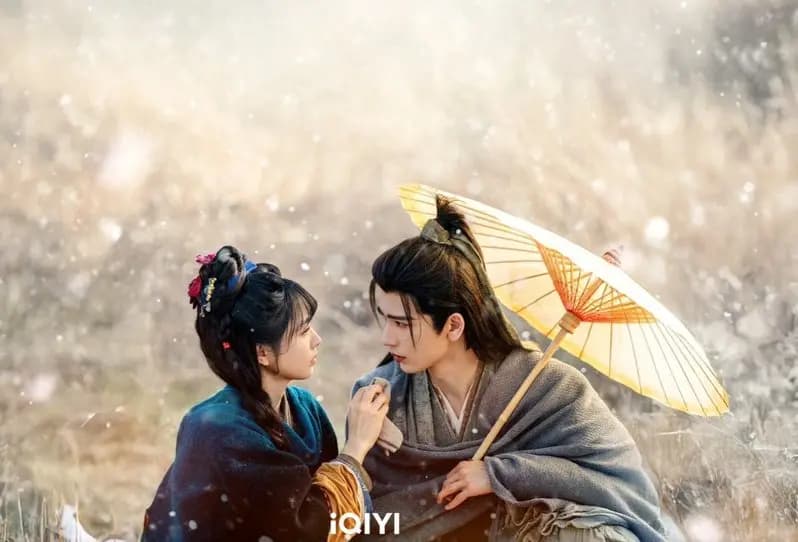
Amid historical dramas that often revolve around ambition and power struggles, Pursuit of Jade offers a love story that endures within a harsh and unforgiving world. The relationship between Xie Zheng (played by Zhang Linghe) and Fan Changyu (played by Tian Xiwei) stands at the heart of the narrative, as they struggle to preserve their feelings in the midst of political intrigue and war. While those around them sacrifice family, friendship, and even their nation for power, this couple clings to love despite their vastly different social and economic backgrounds.
Next articles


The drama presents a uniquely compelling premise through its reversal of traditional gender roles. Fan Changyu is portrayed as a resilient pig butcher with extraordinary physical strength—a profession she takes on to support her family after losing her parents. In contrast, Xie Zheng, the Marquis of Wu’an, is a fugitive recovering from severe injuries caused by an assassination plot. To conceal his noble identity and repay her for saving his life, he agrees to become a matrilocal husband. This decision also helps Changyu secure her home and property from her greedy uncle, who seeks to seize them.
This contrast creates a refreshing narrative dynamic, particularly in moments where Fan Changyu firmly declares her determination to work as a butcher to support Xie Zheng during his recovery. Their relationship subverts traditional conventions, positioning the “wife” as both the economic provider and physical protector, while the “husband” lives under the guise of dependence.
Visually, the drama is captivating from the start. Set in a quiet, modest town during winter, it evokes a serene yet lonely atmosphere. The cinematography effectively contrasts the warmth of human relationships with the cold, snow-covered landscape, symbolizing the emotional isolation of its characters. Early episodes blend slice-of-life elements, comedy, and mystery, with a romance that develops gradually. As the story progresses, it shifts toward larger conflicts involving political intrigue, warfare, and the truth behind a tragedy that reshaped the lives of both Xie Zheng and Fan Changyu years ago.
The emotional weight of the drama is particularly evident in its depiction of war and human tragedy. It clearly illustrates how human lives can be treated as expendable in the pursuit of power. Without excessive exposition, the story conveys that war—regardless of its justification—always comes at a steep cost, whether financially, emotionally, or in human lives.
This emotional depth would not be possible without the strong performances of the cast. Zhang Linghe and Tian Xiwei bring the lead characters to life convincingly, while supporting actors such as Deng Kai, Snow Kong, Lin Muran, Li Qing, and Yu Zhongli deliver solid performances. Deng Kai stands out as Qi Min, a haunting figure burdened by deep trauma after being burned by his own mother as part of an extreme scheme to swap identities and escape a massacre. This psychological pain, combined with living under a false identity within an enemy family, transforms him into a cruel and possessive individual.
Similarly, Sui Yuanqing (played by Lin Muran) is raised by imitating Xie Zheng in every way, yet grows up with a fractured sense of morality, ultimately viewing human life as insignificant. These characters contribute to antagonistic dynamics that feel both disturbing and complex.
Beyond acting and visuals, the drama’s soundtrack also deserves praise. The song selection enhances the emotional atmosphere, with tracks like “Careful with Fate” by JJ Lin and “A Single Thought,” performed as a duet by Zhang Zining and Li Xinyi, effectively conveying the drama’s central theme of love amidst conflict.
Another strength lies in the creative adaptation of the original novel into a visual medium. Author Tuan Zi Lai Xi is known for a distinctive storytelling style that blends serious themes with subtle humor. The drama successfully translates this uniqueness, particularly through the contrast between comedic elements and melancholic background music, the characters’ often serious expressions, and the quiet, wintry setting that reinforces a sense of solitude and calm.
However, despite its many strengths, the drama is not without flaws. The character designs of Qi Min, Yu Qianqian, and Sui Yuanqing suggest that the production team clearly understands how to create memorable and impactful figures. This raises an important question: did the team intentionally expand the roles of supporting characters at the expense of the main leads? If so, why was this choice made by reducing the development and screen time of Xie Zheng and Fan Changyu?
For instance, the character of Princess Qi Shu (played by Yu Zhongli) only appears briefly in the novel, primarily assisting Gongsun Yin in investigating a palace fire from 17 years ago. In the drama, however, both her characterization and screen presence are significantly expanded. A similar adjustment is seen with Yu Qianqian. While these changes are not necessarily problematic for general audiences, they do come at the cost of deeper development for the main characters.
In the novel, Fan Changyu is not only defined by her physical strength but also by her character growth. She evolves from an innocent girl in a small town into a clever and capable strategist. Several key scenes highlight this transformation, from fighting a bear while hunting for meat to applying military strategies on the battlefield. Unfortunately, many of these moments are absent from the drama, weakening the portrayal of her as a future female general.
Xie Zheng’s physical prowess is also underexplored in the adaptation. In the novel, at least four characters possess strength equal to or greater than Fan Changyu—her father Wei Qilin, Wei Yan, Xie Zheng’s mentor, and Xie Zheng himself. The Marquis of Wu’an is not only handsome and intelligent but also exceptionally skilled in combat, making him part of an elite few. Both leads are depicted as evenly matched fighters, with Xie Zheng holding a slight edge in experience. These qualities, however, are noticeably toned down in the drama, reducing the impact of his early role as a seemingly dependent “house husband.”
Another aspect worth noting is Fan Changyu’s military achievements. In the novel, she becomes the first female general of Dayin through a long and arduous journey, rising from the bottom and proving herself in multiple battles. In one particularly significant battle, she leads a small group of soldiers in what is essentially a suicide mission to defend a city from Qi Min’s forces. They are ambushed by elite assassins, and nearly her entire team is wiped out. Even with her extraordinary strength, Fan Changyu is pushed to the brink of death before being saved by Xie Zheng. This event becomes a turning point in their relationship.
Additionally, the novel reveals that Fan Changyu is a disciple of Grandmaster Tao Yi, from whom she learns military strategies that she later applies in war. This crucial detail is omitted in the drama, making her rise feel less like the result of her own capability and perseverance, and more like a byproduct of political struggles between the Wei and Li factions.
Pursuit of Jade is not the only Chinese drama to reduce the focus on its main characters in favor of expanding supporting roles. For viewers unfamiliar with the novel, this may not be an issue. However, this shift ultimately affects the overall narrative. The main conflict feels simplified, and the final arc unfolds too quickly.
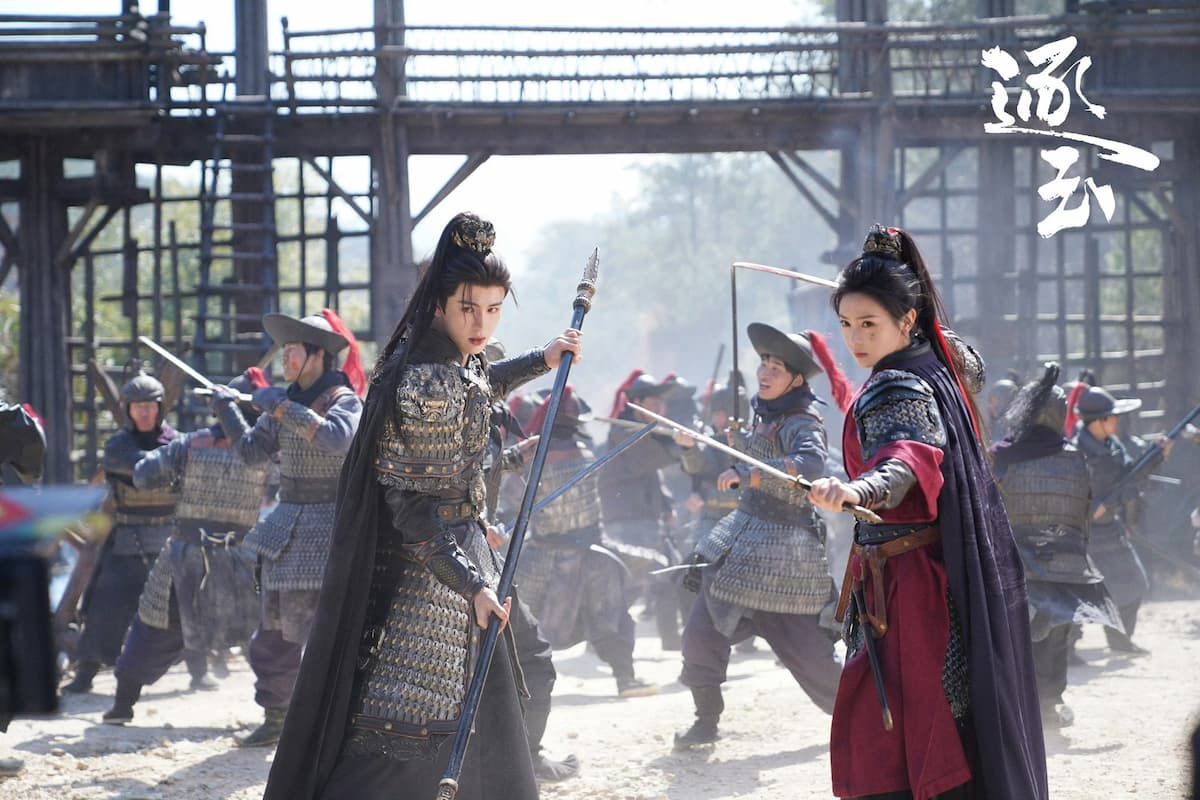
In the novel, the final battle involves three major factions: Wei Yan’s forces, Qi Min’s faction, and Xie Zheng’s side. Xie Zheng and Fan Changyu are ambushed while unprepared, with enemy forces simultaneously attacking the palace. Outnumbered, they must fight desperately to survive. Xie Zheng faces not only Wei Yan but also his own mentor, an equally formidable opponent, resulting in an intense and high-stakes confrontation. Meanwhile, Fan Changyu struggles to break free from the ambush and gather reinforcements.
In contrast, the drama presents this battle only briefly. The fight between Xie Zheng and Wei Yan feels underwhelming, while Fan Changyu appears only momentarily without a significant role. Many of the action and war sequences lack the depth and intensity found in the novel. Ultimately, the drama places greater emphasis on romance and personal conflict rather than the political intrigue and warfare that should have been central to the story.
A more balanced approach—both in character development and in the proportion between romance and large-scale conflict—would have strengthened the drama. With such balance, Pursuit of Jade could have fully delivered not just a love story set against war, but a story where both elements stand equally strong.