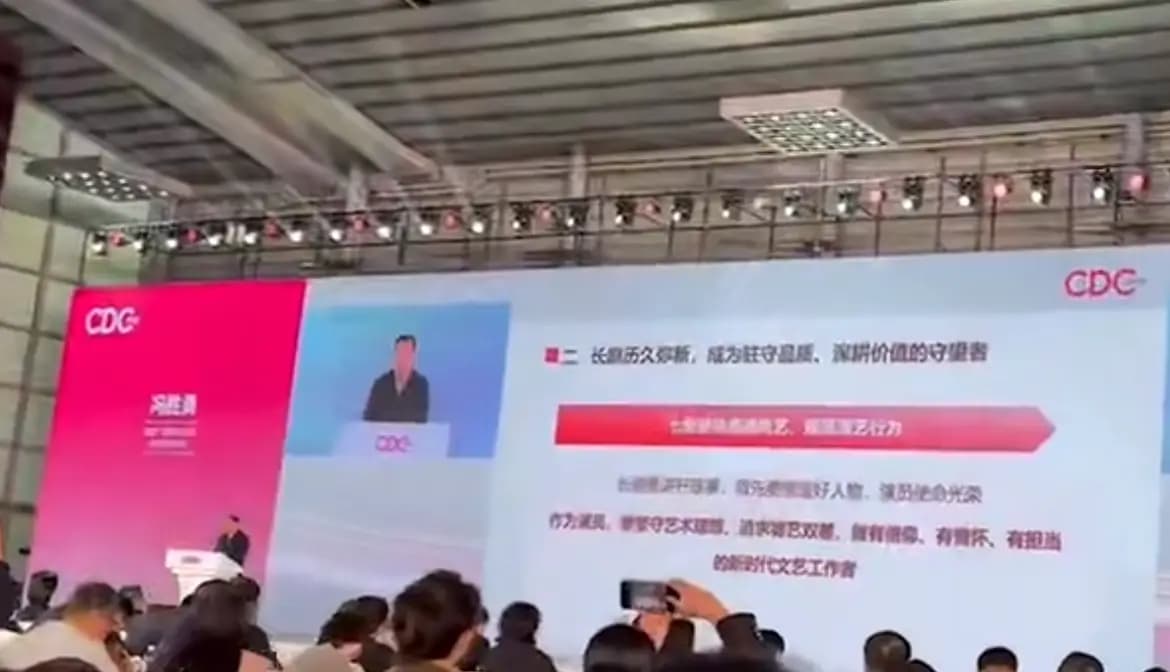
LayarHijau – During the 2026 China Television Production Industry Conference on March 13, a major announcement officially reshaped the competitive landscape for actors in the Chinese drama industry through a statement by Feng Shengyong, Director of the Television Series Drama Division at the National Radio and Television Administration (NRTA). Feng addressed new policy directions regarding the determination of “top billing”—the order of actors’ names in credits—which has long been a source of heated disputes.
Traditionally, the Chinese drama industry has followed a rigid system where top billing was decided based on an actor’s popularity and commercial value. However, Feng Shengyong emphasized that moving forward, the order of names will no longer be dictated solely by stardom. “The general principle is that the order of actors will be based on the number of strokes in their real names,” Feng stated.
Based on the logic of Chinese writing systems and standardizations commonly applied in China, the stroke count method (姓氏笔画为序) typically places names with the fewest number of strokes at the top. For instance, an actor with the surname Wang (王), which has only 4 strokes, would logically appear earlier than an actor with the surname Wei (魏), which has 17 strokes.
It is important to emphasize that this explanation follows standard linguistic logic, unless the NRTA chooses an alternative system, such as prioritizing the highest number of strokes. With this rule, billing is no longer a battleground for management power, but rather a fair and objective standardization.
Feng further added that the government intends to see more fresh faces in leading lineups. “We will establish a mechanism to promote new actors, with the consideration that some of the top positions should be filled by newcomers,” he added. This new regulation encourages transparency and professionalism, including plans for collective training sessions for all main creative teams before major projects begin to enhance collaboration among the cast.
The 2026 breakthrough stands in stark contrast to previous years, where the government acted only as a mediator without a set formula. The new rules represent a proactive step to standardize billing, increase transparency, and actively open doors for new actors on the international stage.