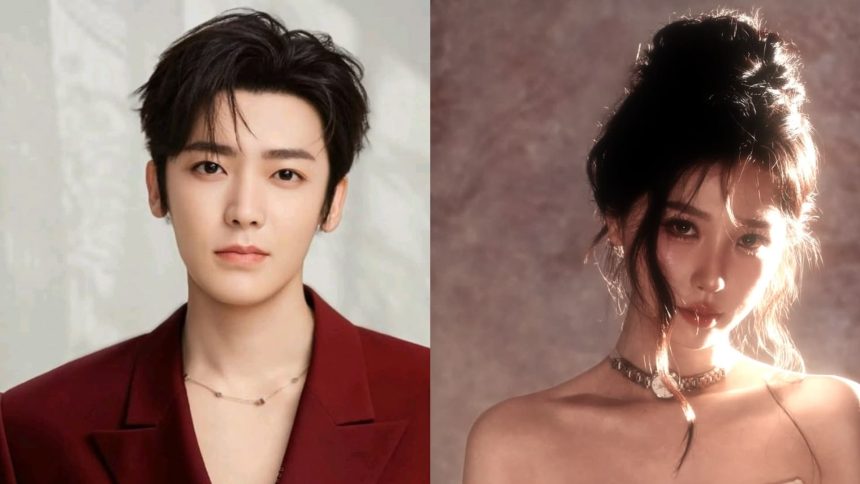
LayarHijau– Actor Hou Minghao has been especially productive this year, releasing several dramas in quick succession. After his popularity surged again through Love in the Clouds, he recently greeted audiences with the fantasy drama The Unclouded Soul alongside Tan Songyun. Shortly after, his latest costume drama Glory (玉茗茶骨), co-starring Guli Nazha, also officially premiered and quickly drew public attention.
Glory aired its first four episodes, but its initial performance on the Maoyan drama popularity chart fell behind The Punishment starring Johnny Huang, Shine On Me led by Song Weilong, as well as The Unclouded Soul. Even so, early reactions from Chinese viewers toward Glory have been largely positive. Many believe the drama has strong potential to rise thanks to its story foundation, solid production quality, and Guli Nazha’s noticeable acting transformation.


In Glory, Hou Minghao plays Lu Jianglai, a top graduate of the imperial examinations who is appointed as a local official and known for his sharp mind in solving complex cases. However, a past case leaves him on the brink of death and causes him to lose his memory. In this critical state, he is saved by Rong Shanbao, the daughter of the Rong family—the dominant force behind the tea business in Lin’an—played by Guli Nazha. Their encounter marks the beginning of a partnership to uncover the truth and identify the mastermind behind what happened to Lu Jianglai.
From its opening episodes, Glory delivers a fast-paced narrative through two parallel storylines. On one side is Lu Jianglai’s investigation-driven arc filled with power struggles, including moments where he disguises himself to uncover past truths. On the other is Rong Shanbao’s storyline, which centers on internal family conflicts and her bold decision to publicly seek a husband, triggering a rivalry among seven men in situations laced with intrigue and humor. These two storylines eventually converge when Rong Shanbao takes Lu Jianglai in, setting the stage for the development of a relationship between two equally intelligent and calculating characters.
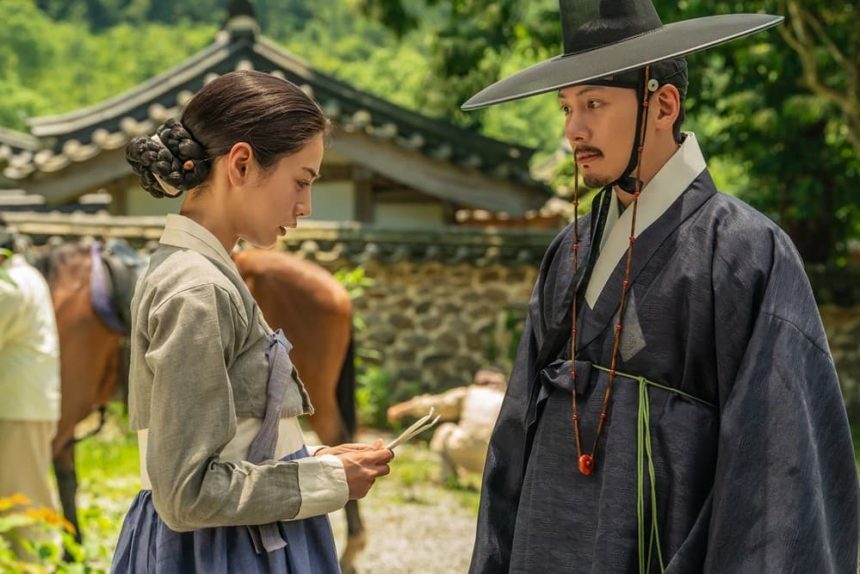
In terms of production, Glory has earned praise for its visuals inspired by the aesthetics of the Song dynasty. The drama showcases tea culture in rich detail, from brewing techniques to tea performances, which are even used as key clues in the case-solving process. The production team also constructed a real-life Song dynasty–style tea business complex covering approximately 8,000 square meters, complete with costumes and props that enhance the period atmosphere. At the end of each episode, viewers are treated to a special segment explaining tea culture, a detail that many feel reflects the production team’s dedication.
Another major highlight is Guli Nazha’s performance. For years, she has often been criticized for relying solely on her looks without strong expressive depth. Through the role of Rong Shanbao, however, that image is beginning to change. She is portrayed as a decisive leader in the tea trade—confident, strategic, and always one step ahead. Many viewers have praised her sharp gaze and commanding presence, describing this performance as a significant improvement and potentially one of the most important roles of her career.
Several early scenes quickly became talking points, such as when Rong Shanbao unapologetically slaps her younger brother for misusing family funds, or when she pretends to be weak before turning the tables on her kidnappers with a cold, resolute expression. These moments were widely seen as emotionally satisfying and further emphasized the strong female character at the heart of the story.
Although Glory’s initial popularity numbers still trail behind Shine On Me, the positive reception toward its story, visuals, and leading characters has left many viewers optimistic that the drama could reverse its fortunes as more episodes are released.