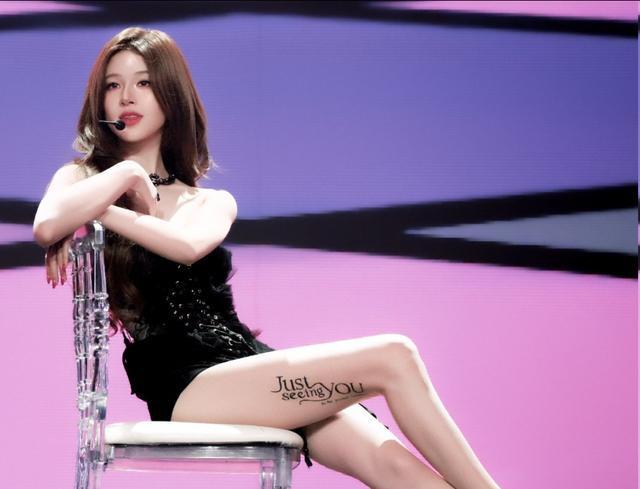
LayarHijau – The contract termination battle between Chinese actress Zhao Lusi and her agency, Galaxy Cool Entertainment, has escalated into a heated war of public opinion.
On one side, Zhao Lusi has accused the company of economic misconduct and neglecting her health. She claimed the agency withdrew 2.05 million yuan (around US$282,000) from her studio account without consent, failed to take her to the doctor when she was ill, and even locked her in a hotel room to perform metaphysical rituals. Zhao also alleged that when she tried to terminate her contract, the company stalled with excuses such as “family illness.”


On the other side, Galaxy Cool Entertainment has denied any breach of contract, insisting that “the wishes of the artists are always put first.” However, the company has yet to address key issues such as the alleged transfer of 2.05 million yuan.
Zhao’s contract reportedly runs from 2023 to 2030. The controversy has damaged both parties’ public images: Galaxy Cool faces accusations of exploiting artists, enabling online abuse, and shifting debts, while Zhao has been criticized for “wasting public resources” and acting “emotionally” in defending her rights. Some netizens have even nicknamed her “Shuangzi,” further hurting her reputation.
Beijing Yongzhe Law Firm founder, lawyer Yi Shenghua, explained that Chinese entertainers terminate contracts for various reasons—health concerns, changes in career plans, or company breaches such as failing to provide promised opportunities. But, he said, the most common scenario is that once an artist becomes popular, they find the contract terms too harsh or the agency’s platform too small to support their growth.
“Health-related terminations are rare, especially those citing mental illness, because proving causality is difficult,” Yi noted. He added that to end a contract for health reasons, an artist must prove the problem was caused by work assigned by the agency, has lasted a long time, and makes it impossible to fulfill the contract.
Yi also warned that if an artist claims health as the reason for termination but returns to work shortly after, their integrity could be questioned and their commercial value could drop.
Rumors of a Sky-High Penalty
One rumor claims Zhao might have to pay up to 400 million yuan (around US$55 million) to walk away from her contract. Similar stories have circulated in the past: Chen Chusheng reportedly faced a 22.7 billion yuan (around US$3.1 billion) claim, while Jiang Jinfu was sued for over 10 million yuan (around US$1.4 million) by Tangren Film & Television.
According to Yi Shenghua, agencies set high liquidated damages clauses to protect their investments. In practice, however, courts rarely uphold the full amount, often awarding less than 30% of the figure stated in the contract. For instance, Chen Chusheng ultimately paid 6.5 million yuan (around US$900,000), and Jiang Jinfu paid 2 million yuan (around US$277,000).
Still, Yi noted that time is often the bigger loss for artists. “Careers in the entertainment industry are short. Spending years in court can cause their popularity to plummet,” he said. Some artists have even had to settle by fulfilling specific projects for the agency before they could officially leave.
Yi advised that negotiation is the best way to resolve such disputes. “Litigation almost always ends in a lose-lose outcome,” he stressed. He also warned artists to be wary of automatic renewal clauses and full-agency agreements, and to always have a personal lawyer to review contracts.
Source: Sohu