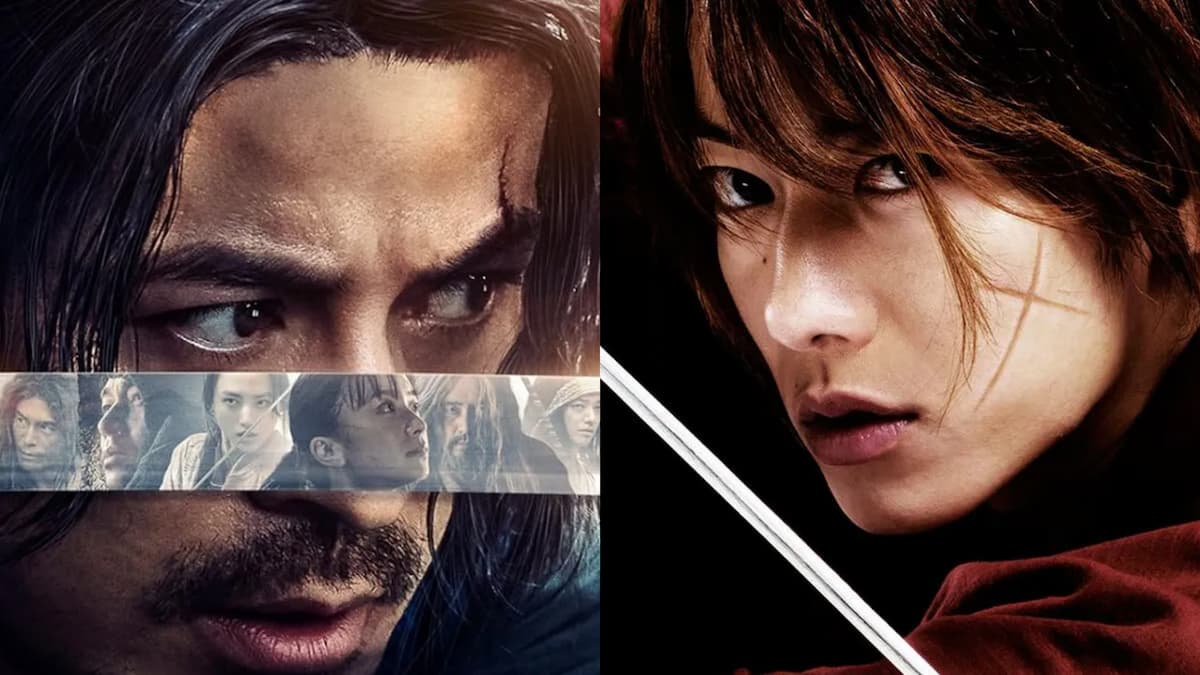
LayarHijau– Netflix’s original series Last Samurai Standing drew attention even before its release. Some international media outlets dubbed it the Japanese version of Squid Game, set in the samurai era.
When the series finally aired, Japanese drama and anime fans couldn’t help but recall a very familiar character from anime and live-action films: Kenshin Himura, the protagonist of Rurouni Kenshin.



Last Samurai Standing follows Shujiro Saga, a samurai living in the Meiji era—the same period as Kenshin Himura. Orphaned as a child, Shujiro, along with seven other orphans, was trained in swordsmanship by a master who inherited the Kyohachi-Ryu school of sword fighting. According to the series’ lore, Kyohachi-Ryu is the origin of the sword techniques used by samurai.
After leaving the school, Shujiro travels to Kyoto as a bodyguard for the Satsuma region. He later takes part in the Boshin War, the civil war marking the end of the Edo period and the rise of the Meiji era. Shujiro fights for the Tokugawa Shogunate against imperial forces, aiming to preserve the Shogun’s political power and the old samurai social and economic order. During the war, he earns the nickname Kokushu, the Human Slayer.
In contrast, Kenshin Himura works as an assassin for the Imperial side, tasked with eliminating political opponents. This earns him the moniker Hitokiri Battosai. Like Shujiro, Kenshin is an orphan raised by his master, Hiko Seijuro XIII, and trained in the Hiten Mitsurugi-ryū sword style.
In other words, both samurai fight for opposing sides and are known as deadly killers for their respective factions.
Of course, Shujiro and Kenshin exist in separate fictional universes. But in a hypothetical crossover, Kokushu the Slayer could certainly meet and clash with Kenshin. In the live-action Rurouni Kenshin films, Kenshin is even shown participating in the Boshin War.
Interestingly, regardless of who “wins,” both Shujiro and Kenshin ultimately lose their samurai status and endure personal consequences. Shujiro develops PTSD from his wartime experiences, sometimes preventing him from drawing his sword. He eventually chooses a family life, becoming a husband and father of two. Kenshin, burdened by regret for his past killings, decides to wander and seek redemption.
Who Would Win in a Fight?
If they met during or after the Boshin War, who would come out on top? The answer is far from clear. In Last Samurai Standing season 1, Shujiro’s techniques aren’t detailed extensively—we only know the name of his school.
However, in the first episode, even when Shujiro hesitates to draw his sword due to trauma, he remains formidable against other samurai. He demonstrates speed and strength that are difficult to overcome.
As the series progresses, Shujiro shows proficiency with weapons beyond the sword. When facing his former colleague Sakura, he skillfully wields a staff and a kusarigama.
Shujiro’s “siblings” from the same school also master similar techniques, including knife skills. His sister, Iroha, proves adept at throwing knives with precision.
When Shujiro uses his sword against opponents like Sakura and Bukotsu Kanjiya, his movements are agile, fast, and powerful, showcasing his impressive mastery.
In the live-action Rurouni Kenshin, the Hiten Mitsurugi-ryū sword style is portrayed realistically yet beautifully. Kenshin’s speed and agility are fluid, precise, and acrobatic, highlighting years of training and combat experience rather than supernatural abilities.
His signature techniques, including the Amakakeru Ryu no Hirameki, combine body momentum, spins, and extreme footwork, making them plausible for a highly trained human.
The live-action films also emphasize the philosophy behind Hiten Mitsurugi-ryū: protecting the weak, not killing indiscriminately. Fights are performed with stunt professionals and realistic choreography, without excessive CGI, allowing viewers to feel the tension and extraordinary speed Kenshin achieves—while believing such skills are attainable by a human.
Looking at what’s shown in Last Samurai Standing season 1, it’s hard to determine who would win in a duel against Kenshin Himura. Shujiro exhibits speed, strength, and flexibility, and can fight with multiple weapons. But the Kyohachi-Ryu school’s ultimate techniques are not fully explained, and his PTSD can affect his readiness in a one-on-one fight against someone of Kenshin’s caliber.
Meanwhile, live-action Kenshin can face multiple opponents at once with acrobatic speed, and his ultimate moves make him extremely deadly in duels. Shujiro, however, has an edge in weapon versatility and real battlefield experience—factors not yet fully showcased.
In short, the winner between Shujiro and Kenshin remains uncertain. Their strengths are unique and dependent on the context, weapons used, and each fighter’s mental state.
Ultimately, the debate over who would win between Shujiro Saga and Kenshin Himura may never have a definitive answer, as both come from different fictional worlds with distinct rules and limits.
What is certain, however, is that both inspire audiences with their swordsmanship, combat experience, and emotional journeys. Imagining a battle between these legendary samurai is fascinating, and for fans, comparing them is more about appreciating their skills and character than declaring an absolute victor.