LayarHijau – Talk of a “winter for micro-dramas” in China’s entertainment industry has recently been trending on social media. Hashtags about a “micro-drama winter” and “micro-drama actors losing jobs” have climbed the trending charts, drawing attention both within and outside the industry.
According to circulating reports, the situation is being driven by two major factors. On one hand, several major platforms, including Hongguo Short Drama Platform, are said to be adjusting their strategies by suspending large numbers of live-action micro-drama projects. As a result, overall production volume has reportedly dropped by around 50 percent. In addition, the guaranteed minimum revenue-sharing model has reportedly been canceled, further squeezing the survival space for live-action micro-dramas.
Next articles



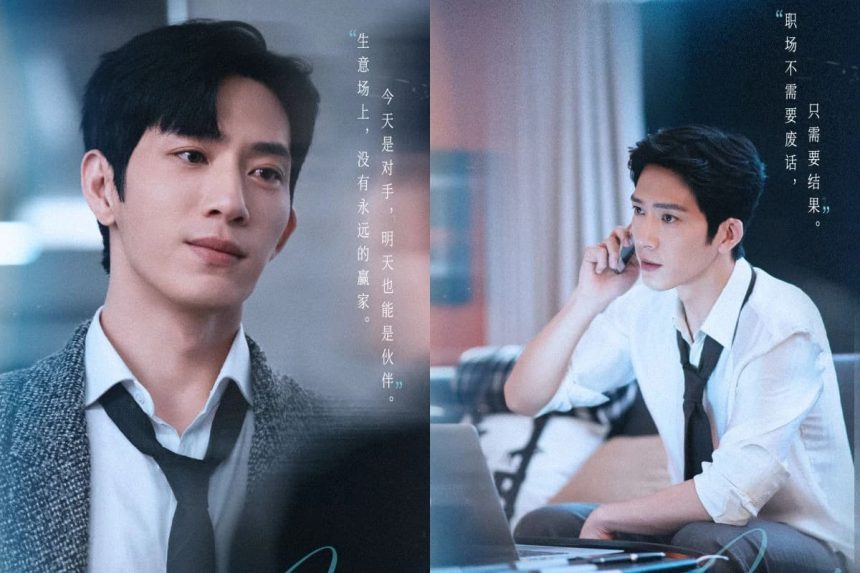
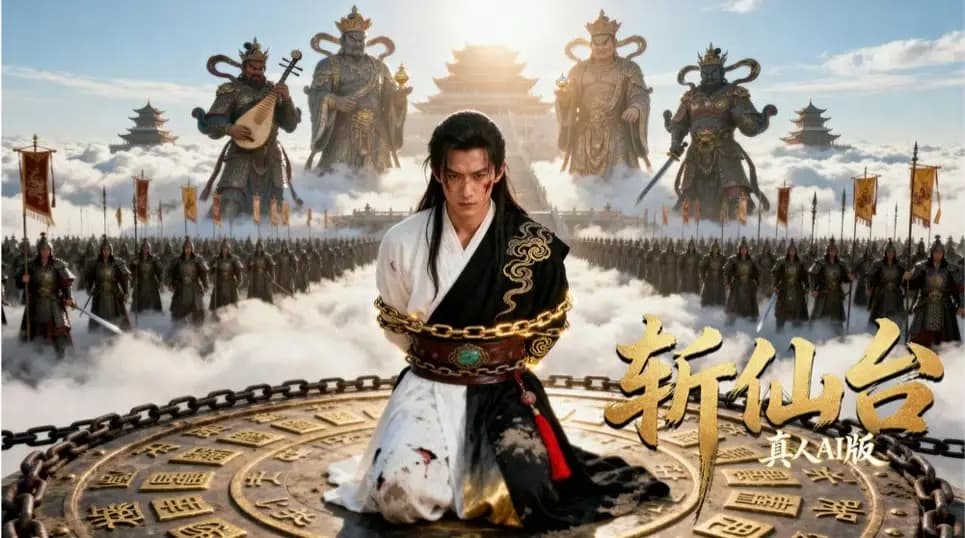
On the other hand, rapid breakthroughs in AI technology for drama production are reshaping the industry. The production cost of AI-generated micro-dramas is said to be less than 1 percent of that of live-action productions. To reduce risk and improve returns, many production companies are shifting their focus to AI projects. This shift has caused demand for live-action micro-dramas to drop sharply, leaving many actors struggling to find work.
Actor Fees Drop Dramatically
One industry insider, Tian Jing, said the situation may not fully qualify as a “winter,” but rather a period of waiting and uncertainty for the industry.
According to him, many people are waiting for clearer signals about new regulations and policies. Micro-drama projects are still being produced, and some crews are continuing to start filming. However, the overall pace has slowed significantly, and producers are being far more cautious about launching new projects.
Still, the impact of AI on the industry is becoming increasingly visible, especially in terms of production volume and actor pay.
Tian Jing revealed that some actors previously charged around 20,000 to 30,000 yuan per day (approximately $2,800 to $4,200). Now, with far fewer opportunities available, many are willing to accept as little as 2,000 to 3,000 yuan per day (around $280 to $420).
Compared with previous rates, this represents a drop of as much as 90 percent in pay for some micro-drama actors.
He also noted that demand for actors has clearly declined. In the past, dozens or even hundreds of productions might begin filming each day. Now, the number of new productions has noticeably decreased.
AI Is Changing the Economics of Production
Beyond the drop in production volume, many industry insiders are closely watching the opportunities brought by AI.
Tian Jing explained that the budget for a single live-action micro-drama could be used to produce multiple AI-generated projects. For instance, a live-action micro-drama typically costs at least 300,000 yuan (about $42,000) to produce. That same budget could fund around ten AI micro-dramas.
With the same investment producing far more content, the potential returns may not be lower. From a purely financial perspective, this makes AI projects far more attractive to producers.
Interestingly, even though he works in live-action productions, Tian Jing admitted that AI micro-dramas have their own appeal.
He said AI dramas often feature extremely fast pacing and are easy to watch in short bursts. This format fits well with fragmented viewing habits, allowing audiences to jump in quickly without committing to a long storyline.
Not Just About AI
Meanwhile, producer Hong Bei believes the industry’s struggles are not solely the result of AI.
In his view, a deeper reason is the end of the industry’s earlier boom period, when profits were much easier to achieve.
He explained that in the early days, an investment of 600,000 yuan (about $84,000) could generate returns of 1 million yuan (around $140,000). Today, however, it has become common for a project with the same investment to earn only 10,000 yuan (around $1,400) in revenue. Some productions that cost 870,000 yuan (about $122,000) have reportedly brought in only 40,000 yuan (around $5,600).
Hong Bei also pointed out that in recent years, a large number of newcomers from outside the industry rushed in without sufficient experience. With extremely low barriers to entry, many projects were produced without professional standards or industry discipline.
As a result, the situation has reversed dramatically—from a time when about 80 percent of projects were profitable to one where roughly 80 percent now lose money.
As investors face mounting losses, production volume has fallen sharply, leaving actors with fewer opportunities. Combined with the removal of guaranteed revenue-sharing mechanisms and stricter platform rating systems, smaller production companies are seeing their profit margins shrink even further. The rise of AI micro-dramas has only intensified this pressure.
AI and Human Actors Likely to Coexist
Despite the challenges, Hong Bei believes AI-generated dramas represent an irreversible technological trend.
He said the rapidly falling costs, fast production speed, and the ability to create visually perfect characters make AI productions increasingly appealing to producers. As audiences gradually become accustomed to the format, some may even develop a preference for idealized AI-created characters.
In the long run, he predicts that AI dramas could eventually outnumber live-action productions by a large margin, potentially reducing job opportunities for many ordinary micro-drama actors.
However, he also emphasized that live-action productions will not disappear entirely.
Demand for storytelling and entertainment will always exist, he said—the format simply evolves over time. From stage plays to films, television dramas, online series, and now micro-dramas, the industry has always adapted to technological change.
According to Hong Bei, AI may replace actors who lack strong acting skills or a distinctive presence. But performers with genuine talent, personal charisma, and the ability to convey emotion will remain difficult to replace.
Tian Jing shares a similar view. He believes AI and live-action micro-dramas will likely coexist for a long time.
AI dramas tend to deliver fast-paced storytelling, strong emotions, and immediate narrative hooks, but they also often follow repetitive patterns. Live-action productions, by contrast, excel in emotional depth, performance nuances, and complex plot twists.
He predicts that in the future, live-action micro-dramas will split into two categories: high-budget premium productions that focus on quality, and small-scale projects with budgets under tight control that aim for high returns through efficient production.
In this scenario, lower-budget projects are likely to face the greatest pressure from AI, while high-quality productions may still maintain their place in the market.
Tian Jing also noted that the AI drama sector is not as easy to enter as it might appear.
As large companies and specialized technical teams enter the field, small studios and independent creators may struggle to compete. He compared the competition to elementary school students trying to compete with postdoctoral researchers.
Faced with these sweeping changes, Tian Jing said he prefers to wait and observe rather than rush into AI drama production.
Instead, he is considering shifting his focus back to films, television dramas, and long-form online series.
According to him, the explosive popularity of micro-dramas over the past two years attracted too many newcomers to the field. Now that the trend is shifting, it may be a good time for industry professionals to return to the more mature and stable world of long-form productions.