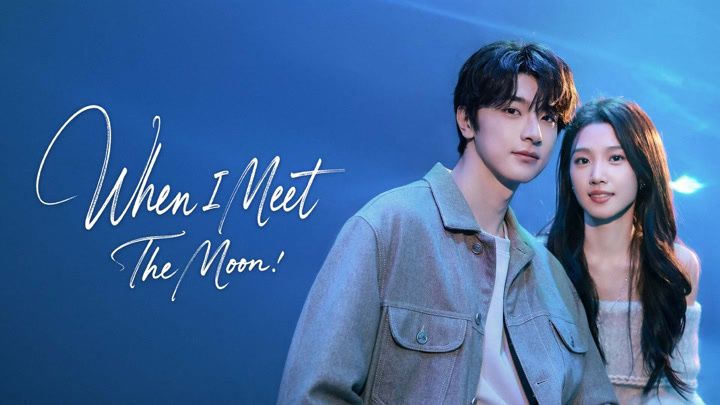
LayarHijau — One line from Zhu Yi’s novel is the thread running through the theme song of the drama When I Meet the Moon (折月亮): “At least I was brave enough. I once met the moon.” The line reflects how Yun Li, the female lead, sees her own courage, and the song’s version is almost identical.
The theme song, which shares its title with the drama’s original Chinese title, is sung by Liu Yuning. It was announced on November 1, 2026, and released on November 2 at 10 a.m. on TME platforms such as QQ Music. The lyrics are by Siji Dou and Pan Chao, the music by Song Tianxiang and Pan Chao, and Song Tianxiang also produced the track.
 Today's Big Deals
3 products · Tap the arrow to see more
UP TO
42%
OFF


Ninja Blast Max Portable Blender, Twist & Go, 22oz
↓ 41%Limited time!
$99.99 $59.49

Affiliate links. We may earn a commission from purchases made through these links.
The drama premiered on November 5 on iQIYI and Jiangsu TV and runs 27 episodes under director Zhang Boyu. It closes Zhu Yi’s Nanwu trilogy, following Hidden Love (偷偷藏不住) and The First Frost (难哄).
“At least I was brave enough. I once met the moon.” Yun Li– When I Meet the Moon
Yun Li is a shy young woman with social anxiety and mild hearing loss in her left ear. She reunites with Fu Shize, whom she quietly adored in high school, and summons the nerve to pursue him. Fu Shize is a brilliant graduate student carrying trauma from the death of a close friend. They break up, Yun Li goes abroad to study, and Fu Shize works to win her back after she returns.
A search of Chinese-language sites confirms the line is Zhu Yi’s. It is the title of Chapter 12 in the final volume of the print edition of the novel, and it was printed as the author’s signature in a special edition. Fans quote it often, and it is said to have inspired the title of the international version of the drama. The Taiwan edition used a variant of the line, adding “and met you,” as promotional copy.
The song moves like someone falling quietly in love. The singer looks up at the sky and realizes someone has always been there, though he cannot say since when. He imagines himself as a cloud drifting at the moon’s side. From there grows the courage to meet the moon, and then he gently takes a small piece of it so that loneliness can leave. In the chorus, his feelings come out plainly in English: he wants to stay together, and saying “I love you” over and over never gets old.
The line about courage in the first verse is nearly the same as the novel’s. The difference is that the song adds a word linking cause and effect and drops “at least.” The tone shifts from consolation over a brief encounter to a statement that courage is what opened the way. The same line returns in the second verse, but the ending changes: “meeting” becomes drifting off to sleep beside the moon, as if the distance has closed even further.
Musically, the song is a slow, gentle pop ballad. Media have called it a warm, sweet song. According to a score review on Weibo, its tempo is about that of a relaxed heartbeat, slower than a stroll. The arrangement features guitar, drums, bass, piano and a string orchestra. The first several seconds are piano and strings with no voice, as if listeners are left to wait for night to fall before the vocals come in.
It is also an easy song to sing and to listen to. The highest note is undemanding, and still below the range Liu Yuning usually reaches on stage. There is no stretch where listeners brace for a big high note.
Vocally, he opens in a near whisper, holds back through the middle, then lets a clear, full voice out in the chorus. On the word for courage, his voice softens instead, like someone rising on tiptoe to touch something. That is a change from his OST work, which usually leans on powerful high notes. This time he sings like he is telling a story, with no forced high notes and no vocal flourishes. After the second chorus, a low hum slowly descends, like a lullaby.
In the drama, that choice fits Yun Li, who is shy but brave. The song begins with a small, hesitant voice and gradually opens up, just as Yun Li adores from afar before finally stepping forward.
The chorus about love lighting every dark night can also be read from Fu Shize’s side. He starts out gloomy, then strives to become a place for Yun Li to come home to. The moon in the song, then, is not only Fu Shize in Yun Li’s eyes but a role both of them work toward, in keeping with a story that Hong Kong media describe as mutual rescue. The lyric’s address to the cloud can also be read as wordplay on Yun Li’s name, since her surname Yun means cloud. The production team has not confirmed this reading.
The song thus works as a summary of the drama’s emotions. A first act of courage, however small, is meaningful, and that is where the story of Yun Li and Fu Shize begins.
Support Layar Hijau
Find Layar Hijau's content helpful? Support us in continuing to bring you the latest Asian drama news and updates.


For more information, click here.