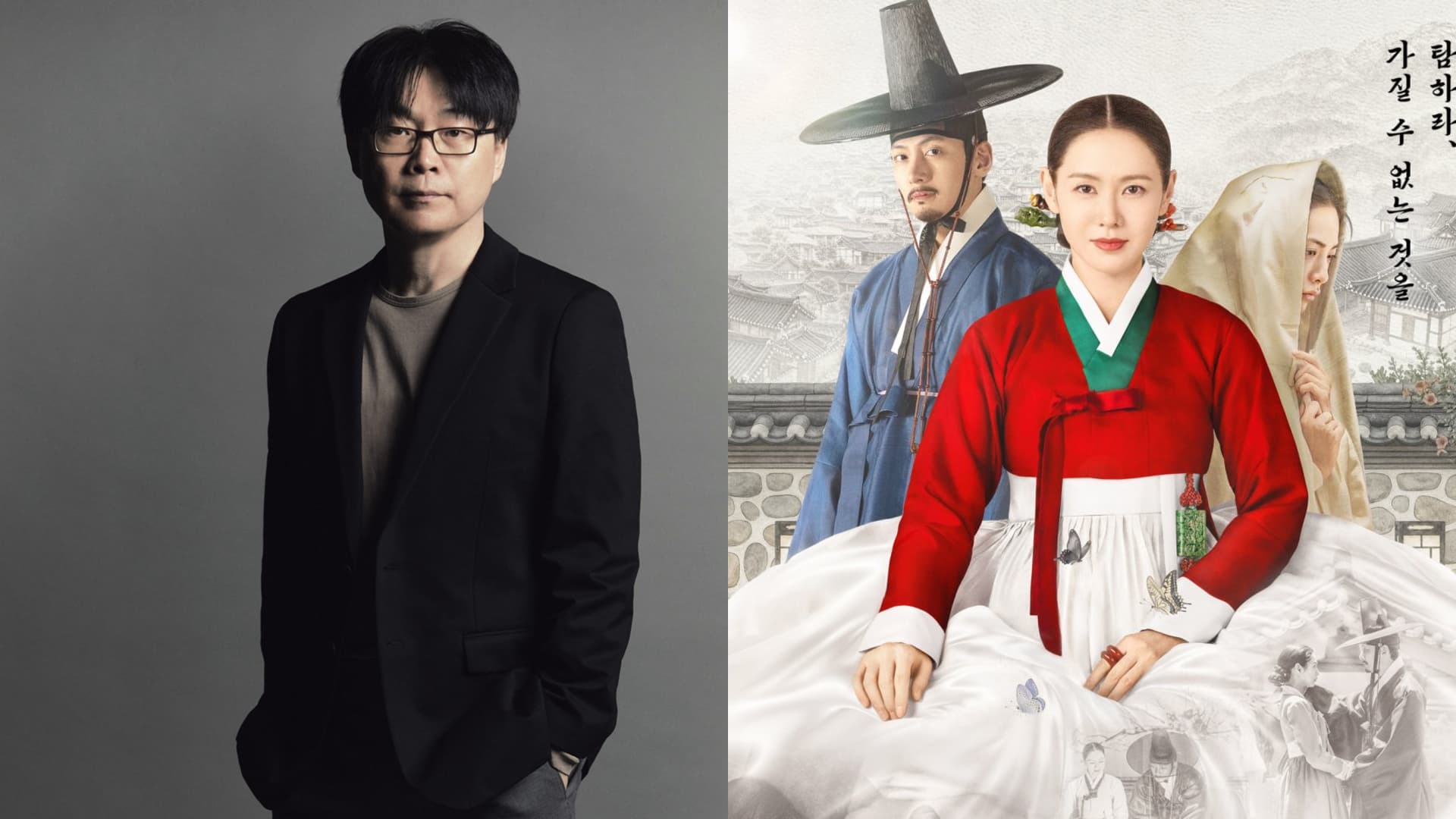
LayarHijau – The Scandal director Jung Ji-woo has addressed reactions to the intimate scenes in the Netflix series, explaining why he deliberately reduced the intensity of the sexual content and avoided building romantic scenes around increasing sexual tension.
The Scandal has drawn attention for several scenes featuring a relatively high level of physical exposure. At the same time, some viewers felt that the series did not emphasize sensuality as strongly as they might have expected from a story centered on love, desire, and scandal.
Jung Ji-woo stressed that this was a deliberate choice in his directing approach.
Jung Ji-woo Deliberately Reduced the Intensity of the Intimate Scenes
Jung Ji-woo said he had decided from the beginning that the love scenes in The Scandal should not focus on increasing sexual intensity.
He explained that he deliberately wanted to move away from an approach in which intimate scenes are gradually built up for the purpose of creating stronger sexual tension.
Instead, he did not want the depiction of the characters’ relationship to be structured around steadily increasing sexual tension.
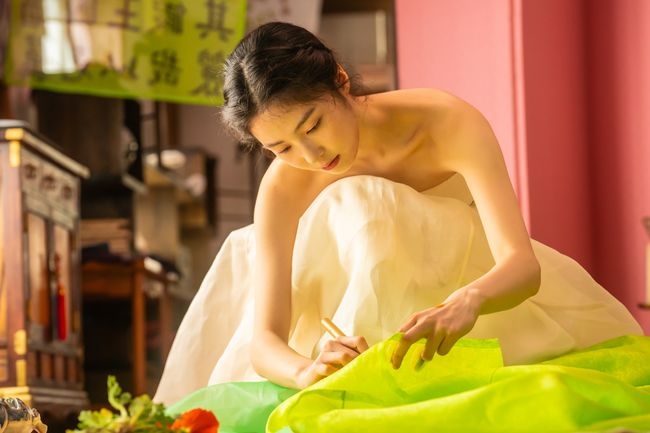
The decision is notable because The Scandal contains several intimate scenes involving the main characters. Some of the actors also took part in scenes involving a significant level of physical exposure.
Jung Ji-woo explained that these scenes were discussed extensively before filming began.
According to the director, the cast was informed in advance about the content of the series, what would happen in specific scenes, and how those scenes would be filmed. He also encouraged the actors to discuss the scenes with their agencies and even with their families before making their decisions.
As a result, the more revealing scenes were discussed and prepared during the early stages rather than being decisions made unexpectedly during filming.
The Director Praises Nana’s Performance as Hee-yeon
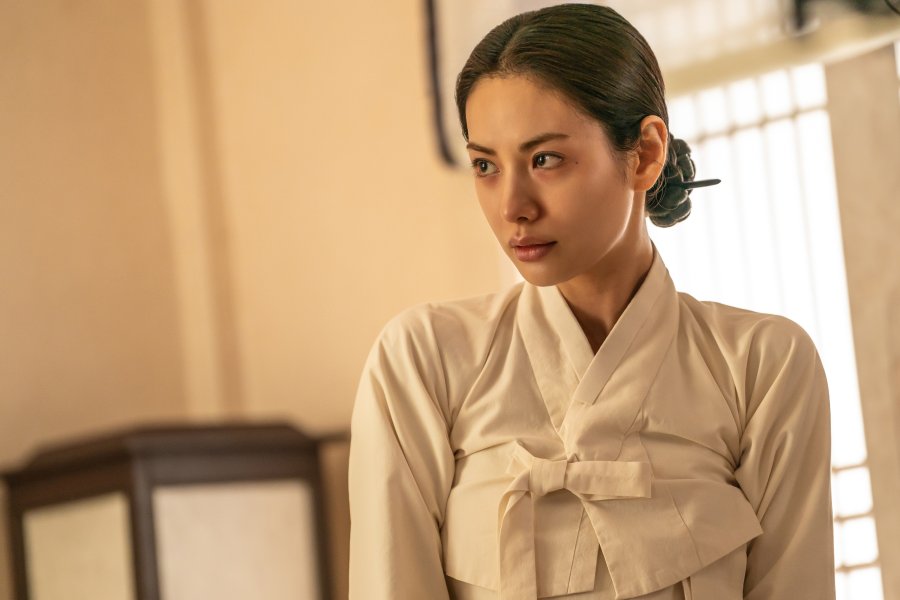
Jung Ji-woo also spoke highly of Nana, who plays Hee-yeon in The Scandal.
Hee-yeon loses her husband before they can properly begin their married life and is subsequently pressured to fulfill the duties expected of a virtuous widow.
The character faces considerable emotional pressure throughout the story.
Jung Ji-woo praised Nana for the intensity with which she portrayed Hee-yeon’s emotions. He said her performance made him feel as though she was pushing her physical limits to preserve the raw emotions required for the character.
To capture those emotions as naturally as possible, Jung Ji-woo said he consistently tried to film the first take with two or three cameras simultaneously.
The approach allowed him to preserve spontaneous emotions that might disappear when a scene was repeated.
The director admitted that there were moments when he worried Nana might be immersing herself too deeply in the character’s emotions. At the same time, however, he was impressed by her commitment to the role.
Jung Ji-woo Responds to Questions About Nana’s Casting
Jung Ji-woo also addressed criticism that Nana might not have been a natural fit for a historical drama.
Rather than focusing on her image from previous modern-day roles, he emphasized the effort she put into portraying Hee-yeon’s emotional state.
For him, the important question was not simply whether an actor visually appeared suited to a historical setting, but whether they could bring the character’s emotions convincingly into each scene.
His comments therefore reflected his confidence in Nana’s approach to the role.
Jung Ji-woo Is Rethinking His Directing Style
Jung Ji-woo has previously explored love, desire, forbidden relationships, and intimate aspects of human relationships through films and series including Happy End (1999), Eungyo (2012), and the Netflix series Somebody (2022).
He even described his own directing style as that of an “erotic director.”
However, after working on The Scandal, Jung Ji-woo admitted that he has begun questioning whether he wants to continue working in that way.
He said he has started wondering whether the discomfort created by certain forms of depiction has reached a point where it can overshadow the essence of a story.
The director also discussed how depictions of violence and sexuality are changing in recent works. He believes portrayals of violence are increasingly being pushed toward more provocative territory, while sexual content should instead be approached with greater restraint and through alternative ways of storytelling.
Jung Ji-woo described this shift as a healthy direction.
He also revealed that he wants to explore a subject other than love in his next project.
The Scandal Reverses the Traditional Gender Dynamic
Beyond the discussion surrounding its intimate scenes, one of The Scandal’s central concepts is its reversal of a familiar gender dynamic in romantic stories.
In the series, an older woman takes the leading role in a relationship with a young man who falls in love.
The character who becomes the subject of gossip and erotic paintings is also a man rather than a woman.
Jung Ji-woo said one of the most fascinating aspects of the classic novel that inspired the story was the fact that Jo Won ultimately could not betray Lady Jo.
He found it intriguing to consider how a relationship that prevents a man from breaking free could have been created in the 18th century.
According to the director, viewing the story through this reversed relationship dynamic made it an interesting challenge while also giving the characters’ relationships multiple layers.
He also structured the female characters across different levels of society, from upper-class women such as Lady Jo and Jeong Gyeong-bu-in to Hee-yeon and Eun-sil, played by Kim Ji-an.
Through these characters, he wanted to portray how women from different social backgrounds navigated their lives during that period.
The Scandal Is Set During the Reign of King Jeongjo
The Scandal is set during the period when the classic novel that inspired the story was published, corresponding to the reign of King Jeongjo.
The king is not explicitly identified by name in the series. However, references to his father, Crown Prince Sado, as well as the construction of Hwaseong Fortress provide clues about the historical period.
Jung Ji-woo described the era of King Jeongjo as a time when “everything was moving.”
Although the monarchy and social class system remained firmly in place, he noted that the period also showed signs of movement toward a more modern society.
He considered developments such as individuals being able to own assets regardless of their social status as important elements in constructing the world of The Scandal.
The series has also drawn attention for its Korean aesthetic, including hanbok, minhwa folk paintings, and pansori, which became notable elements of its visual and cultural presentation.