LayarHijau– Information about a Pokémon-themed event scheduled to take place on January 31 at Yasukuni Shrine has sparked widespread attention across Chinese and international social media platforms. The topic “Pokémon Yasukuni Shrine” quickly trended, with many netizens arguing that the event crossed a sensitive historical line and demanding a clear explanation and apology from the parties involved.
Pokémon is a globally renowned game and anime IP developed by Game Freak and Creatures, and published by Nintendo. Characters such as Pikachu and Psyduck are widely recognized worldwide, and the Chinese market has long been regarded as a core pillar of Pokémon’s global strategy.

Event at Yasukuni Shrine and the Controversy
The event in question was titled “Pokémon Card Children Experience Classroom,” a family-oriented activity planned to be held within the grounds of Yasukuni Shrine. According to available information, the event was not directly organized by Pokémon or Nintendo, but by a sports club in Tokyo’s Chiyoda Ward, intermediary company FRD, and the organization Sake Of Peace. The Pokémon card experience was only one segment of the overall program.
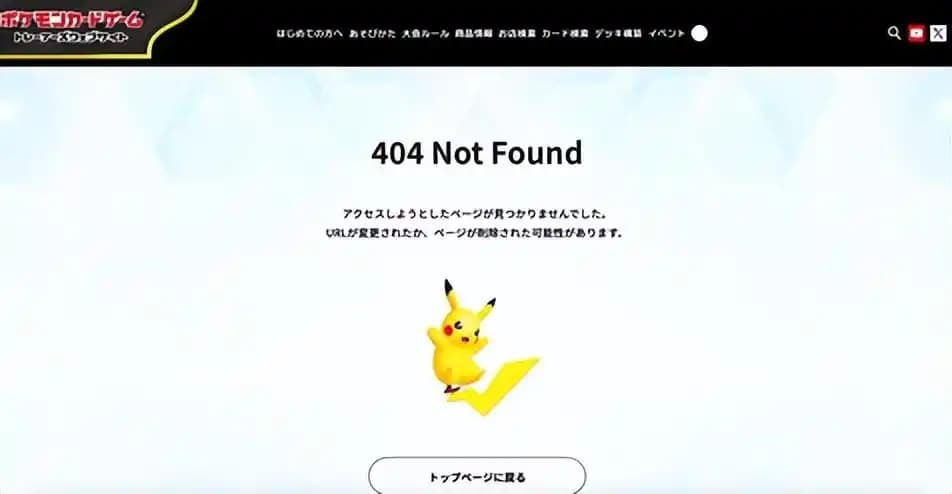
However, the event details were once published on the official Pokémon website, which immediately drew sharp criticism after being discovered by netizens. Shortly afterward, the page was taken down and is no longer accessible, raising questions about Pokémon’s internal review and approval process.
It is understood that Pokémon card events generally fall into two categories: official events directly hosted by Nintendo or Pokémon, and so-called “approved independent events,” which are organized by certified card game players recognized as “approved organizers.” In the latter case, organizers provide their own venues and staff, while Pokémon only offers limited support, such as listing the event on its website and providing small prizes. The Yasukuni Shrine event reportedly fell into this second category.
Despite this, many netizens argue that as long as the event appeared on Pokémon’s official website, the company cannot fully evade responsibility, since such listings require internal approval.
Public Criticism and Reactions
The two individuals who applied to host the event were identified as Japanese Pokémon card players using the online names “Nagoshi” and “P.” Following the backlash, Nagoshi removed the event announcement from his page, stating that the planned activity had to be canceled and expressing apologies to those who had hoped to attend. Meanwhile, the event link reportedly remained visible on “P’s” personal social media account.
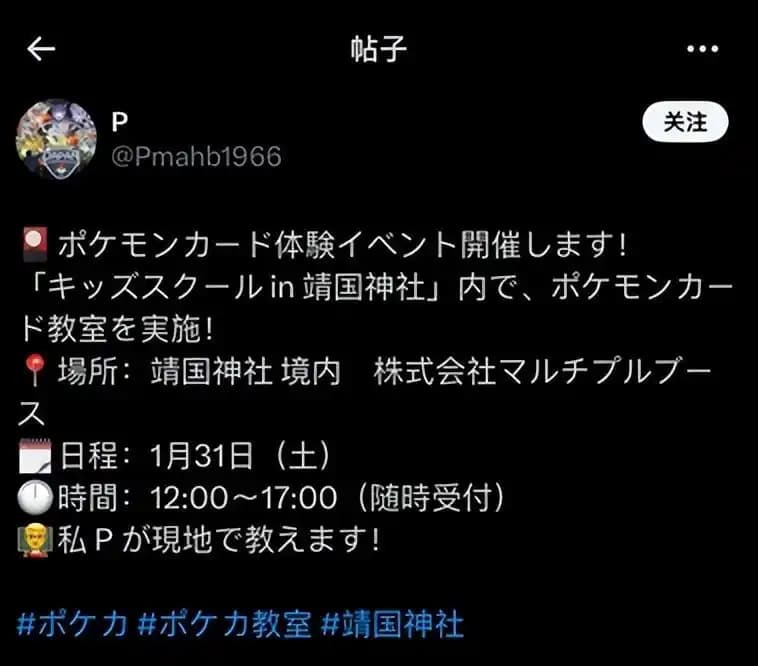
As of now, neither Nintendo nor Pokémon has issued an official explanation or apology. Public criticism has mainly focused on three points. First, the approval of an event at such a politically and historically sensitive site reflects serious flaws in the review process. Second, the swift removal of the event page suggests that Pokémon is well aware of the historical red line involved, raising questions about why the event was allowed in the first place. Third, many netizens argue that Pokémon should not continue profiting from the Chinese market while disregarding Chinese public sentiment and historical sensitivities.
Not the First Time
This is not the first time Pokémon has been linked to Yasukuni Shrine. In 2016, when Pokémon Go launched in Japan, the shrine was designated as an in-game gym and PokéStop due to the game’s use of real-world map data. This triggered strong reactions from Chinese players, who quickly “occupied” the gym on the game’s first day of release.
In 2019, employees of Creatures—one of Pokémon’s shareholders—were also reported to have visited Yasukuni Shrine and publicly shared the visit on social media. After receiving widespread criticism, the posts were deleted, but no clear apology was issued.
Renewed Focus on Historical Sensitivity
Yasukuni Shrine is widely regarded as a spiritual symbol of Japanese militarism, as it enshrines Class-A war criminals. For many Asian countries, including China, it represents a collective historical trauma rather than a mere historical landmark.
Recent reports have also revealed that the stone lion statues flanking the shrine’s main torii gate were allegedly looted from a Qing Dynasty temple in Liaoning during the First Sino-Japanese War in 1895. In addition, the shrine’s affiliated Yūshūkan museum displays a Krupp cannon seized from the Lüshun Fortress, labeling it as a “war trophy” while omitting any mention of Japan’s aggression. These issues have further intensified criticism of how Japan addresses its wartime history.
Calls for a Clear Response
Many observers argue that Nintendo cannot simply delete the event information without providing a clear and public response. Given Pokémon’s massive global influence and its strong fan base in China, the company is expected to demonstrate a clear stance on historical responsibility and public sentiment.
For many Chinese fans, Pokémon and Pikachu have long been among the few Japanese cultural exports that enjoy broadly positive perceptions, especially among younger audiences. However, public opinion remains firm that historical issues constitute a non-negotiable red line.
This incident is also seen as a warning to other Japanese companies seeking to expand their presence in the Chinese market: sensitivity to historical issues and respect for public sentiment are essential, and crossing that line may come at a significant cost.