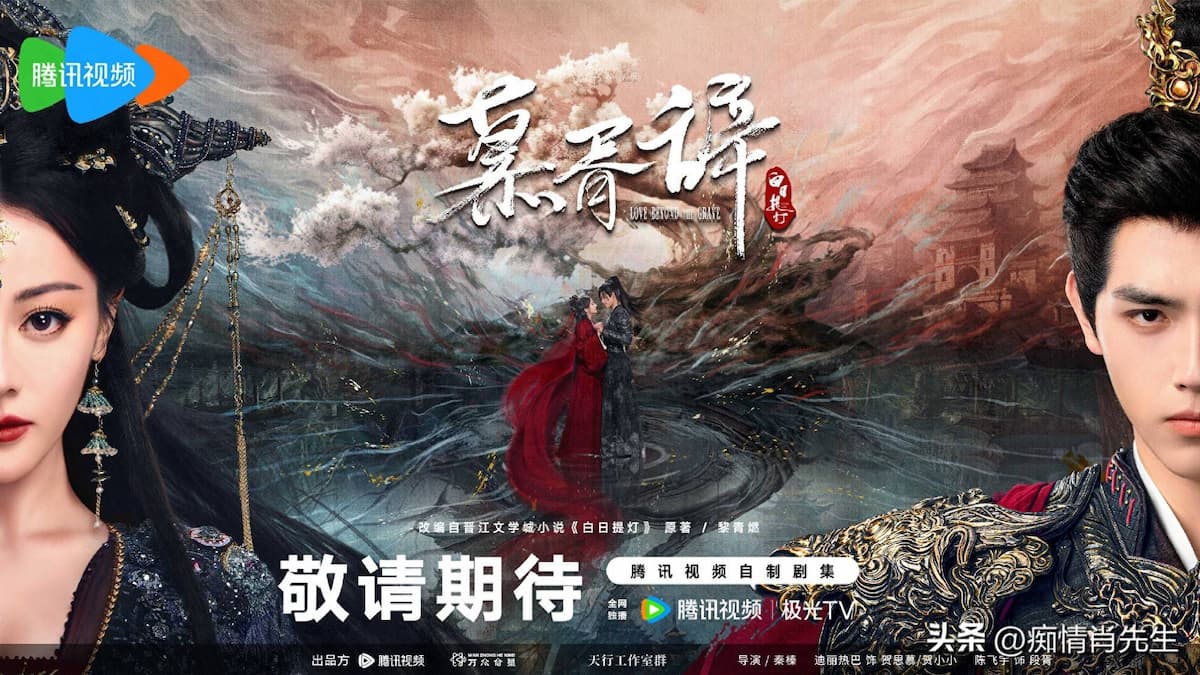
Directors: Tian Li,He Tan |
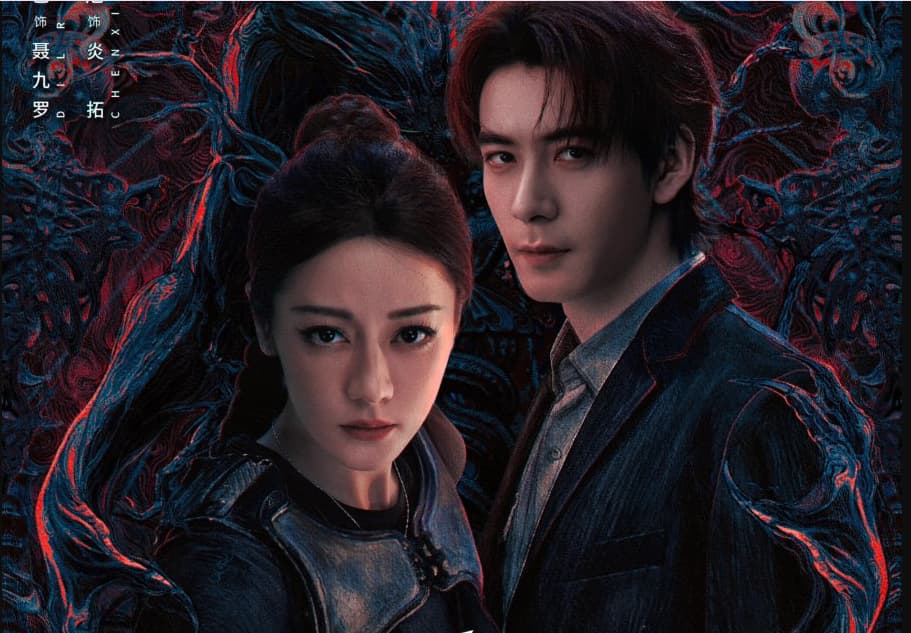
Cast: Dilraba Dilmurat, Oliver Chen, Zhang Li, Dong Chang, Su Xin |
Episodes: 32 Episode |
Platforms: WeTV, Viki Tencent Video |
Synopsis:
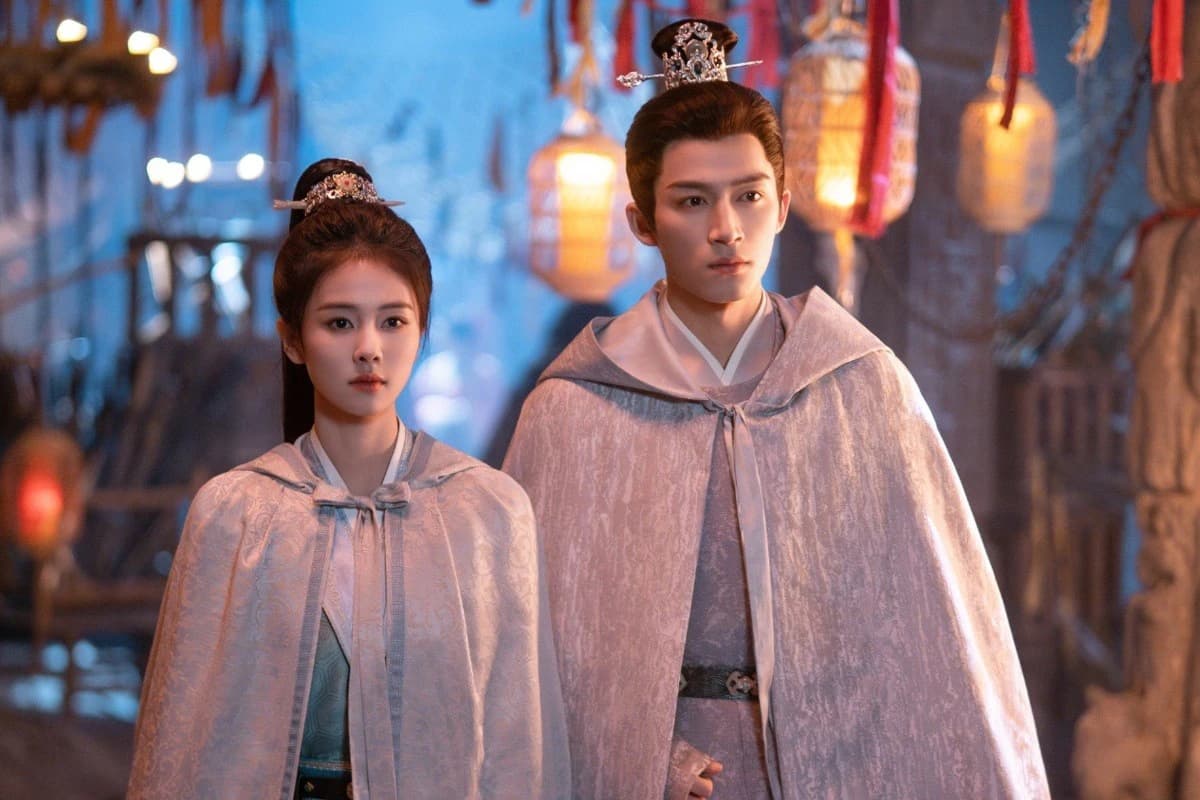
The drama tells the story of the unexpected bond between Nie Jiuluo, the “Mad Blade” of the secret Nan Mountain Hunters organization, and Yan Tuo, a kind man who has endured years of oppression. From initial conflicts to life-saving collaborations, they gradually build trust and love, joining forces against the evil Dixiao to protect love and peace, ultimately finding a way to be together.
Review:
Love on the Turquoise Land is a drama that demonstrates remarkable skill in navigating the demands of staying visually faithful to its original novel while adhering to the censorship restrictions imposed by the Chinese government. Beyond that, the production team also shows a keen understanding of audience preferences.

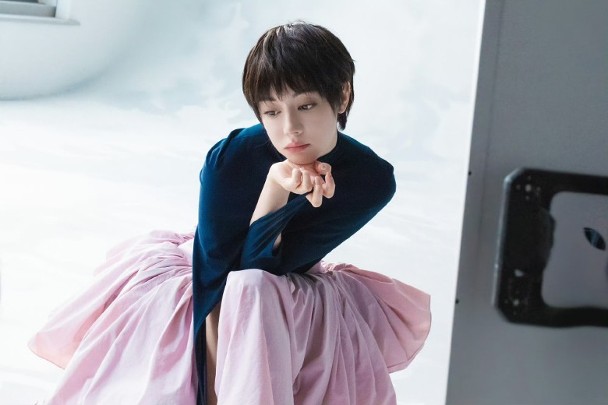
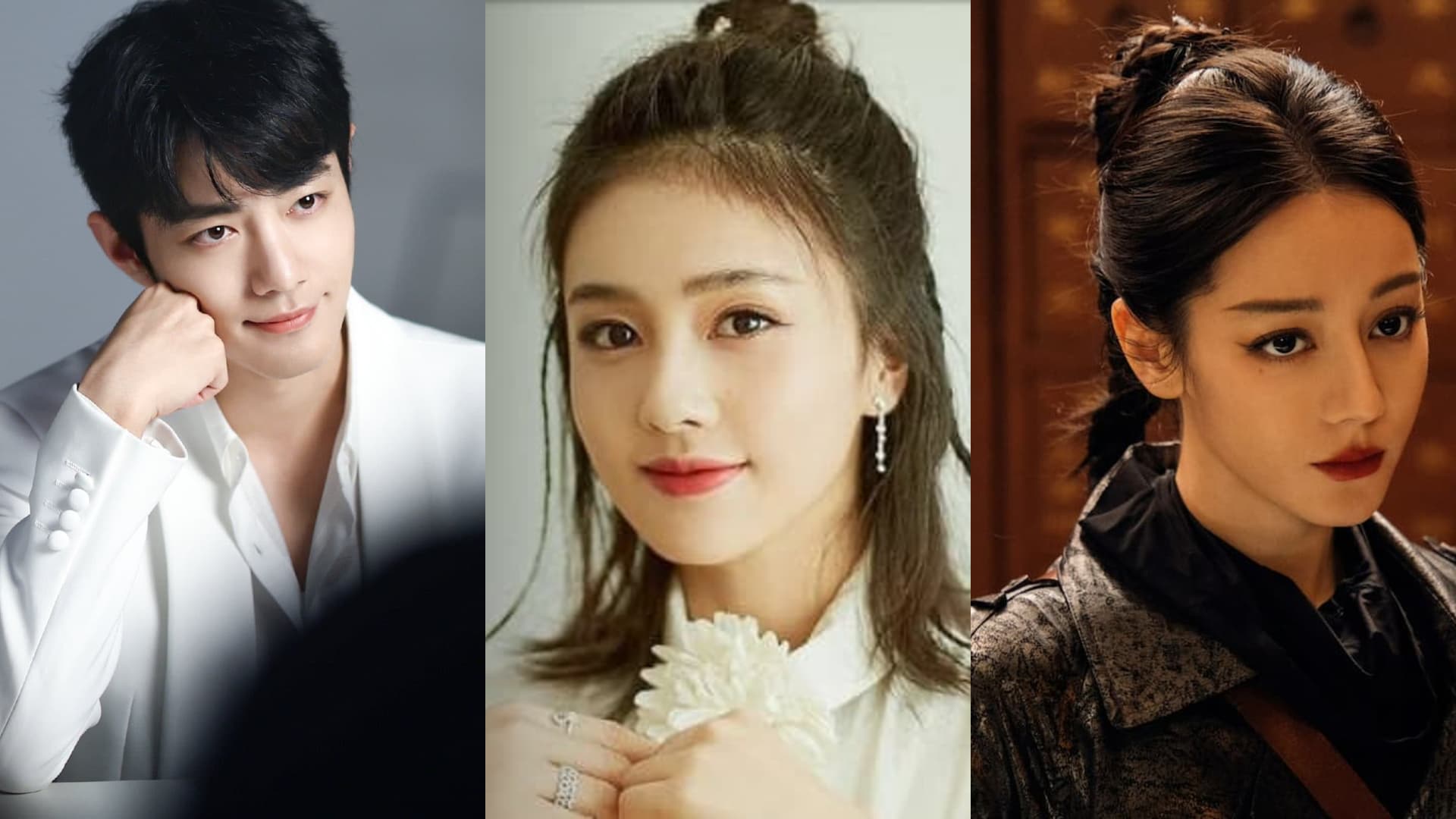
Government censorship is evident in the modification or removal of explicit scenes in the drama. For example, Yan Tuo clashes three times with the Nan Mountain Hunters, but the story has been simplified. In the novel, he is captured twice and undergoes severe physical torture, but these events are not shown in the drama version.
Additionally, the novel Love on the Turquoise Land discusses the myth of Nuwa, the mother goddess believed by ancient Chinese society to have created all living beings. References to Nuwa appear throughout the novel. Her powers explain Nie Jiuluo’s survival and rebirth. Nuwa is also credited with creating the Black and White Abyss, humans, xia (earth demons), and all related technology.
However, Chinese censorship forbids such concepts, so Nuwa and her powers are completely removed from the drama. Instead, the drama explains the creation of the xia through a mutation caused by a meteor shower, which alters the land and gives it the ability to mutate genes and more.
Besides removing certain novel elements to pass censorship, the production team also modified the main characters’ designs to make them more acceptable to general audiences. Nie Jiuluo, Yan Tuo, Lin Xiruo, Xiong Hei, Uncle Jiang, and other characters underwent personality modifications. This is a common practice in novel-to-TV or film adaptations worldwide.
For instance, in the novel, Emperor Qin Shi Huang is obsessed with immortality. To pursue this obsession, he forms an elite team called the Nan Mountain Hunters. Their mission is not to fight crime or uphold justice but to uncover the secret of immortality. According to myths of that time, the secret could be found underground. There were also rumors of a man-eating monster (di xiao) believed to reside there. This is why the elite team digs into the Black and White Abyss, attempting to capture the creature to uncover the secret of immortality.
As dynasties change and time passes, the descendants of this elite team experience a decline in status and resources, eventually becoming tomb robbers and hunters. Initially, their goal was to capture di xiao and retrieve artifacts from the Black and White Abyss to discover the secret of eternal life, while their descendants aim to sell the artifacts for a high price.
In the drama, this group of hunters’ mission to seek the secret of eternal life under the emperor’s orders is mentioned briefly. However, their main goal is portrayed as noble: fighting earthly demons to protect the people, just as the emperor commanded.
Changing the depiction of the opportunistic hunter team into a more purpose-driven group also alters the characterization of figures like Uncle Jiang and other hunters.
These character design modifications are commendable. From an acting perspective, the main cast—including Dilraba Dilmurat, Oliver Chen, Tian Xiao Jie, Zhang Li, and Su Xin—delivers solid performances, bringing their characters to life.
The drama carefully designs both protagonists and antagonists with depth and complexity. Dilraba and Oliver Chen successfully portray their characters, capturing the contrast and chemistry between the two strong leads.
Antagonists such as Lin Xiruo and Xiong Hei are not depicted as bloodthirsty human monsters but as nonhuman beings with human emotional complexity. Zhang Li portrays the main villain with skill, showing a terrifying aura without exaggerated expressions, while also revealing a contrast between cruelty and maternal instincts toward Yan Tuo. This creates a dilemma for the audience, evoking empathy, fear, and dislike simultaneously.
Interestingly, these well-developed antagonists and supporting characters are given appropriate screen time, ensuring that they do not overshadow the main characters: Nie Jiuluo and Yan Tuo.
Love on the Turquoise Land balances tension and supernatural mystery stemming from human-earth demon conflicts while exploring themes relatable to viewers, such as family, friendship, and romance.
One notable achievement is how the drama addresses what the novel An Owl Rising from the Green Soil by Wei Yu lacks. The novel contains minimal romantic elements, with no intimate or tender moments between Nie Jiuluo and Yan Tuo.
The drama resolves this shortcoming without excessive modification, an approach other Chinese dramas could emulate. Simple scenes—like Yan Tuo and Nie Jiuluo fighting in the gallery, Yan Tuo carrying her, or washing her hair—are transformed into romantic moments through color tones, lighting, and facial expressions. Adding these romantic elements demonstrates the production team’s strong understanding of audience preferences. Importantly, this is done without wild story alterations that would shock viewers or anger novel fans.
Perhaps this is why Wei Yu chose to participate in a group watch of the drama instead of posting criticism on Weibo, unlike other novelists whose works aired simultaneously with Love on the Turquoise Land.
Action sequences in the drama are another highlight. Female characters, including Nie Jiuluo, Lin Xiruo, and Yu Rong, are portrayed as strong and capable, sometimes surpassing male characters. Nie Jiuluo’s costume, sword placement, and additional technology in the drama are upgrades not present in the novel.
The choreography and depiction of action scenes highlight the characters’ strength and leave a deep impression on viewers who have not read the novel.
However, Love on the Turquoise Land is not without shortcomings. Censorship and perhaps budget constraints result in some underdeveloped scenes. One reason Yan Tuo cannot take revenge on Lin Xiruo and the earth demons is not due to his parents’ death but because of his sister’s fate. In the novel, Lin Xiruo clearly states that the sister is in her grasp. Yan Tuo feels guilty for his carelessness, which allowed his sister to fall into Lin’s hands. He struggles to find and save her. While her fate is revealed at the novel’s end, the drama only briefly touches on it, creating ambiguity. This may be due to censorship or simplification.
The final battle between the earth demons and the Nan Mountain Hunters is originally an epic, large-scale confrontation involving the White Demon/White-Eyed Demon army. Both groups are shocked by the White Demon army riding certain creatures. This large army eliminates the earth demons one by one and captures the Nan Mountain Hunters individually. The remaining groups are powerless against the White Demons, whose strength and speed surpass the earth demons multiple times. Ordinary humans have no chance against such supernatural beings.
The surviving Nan Mountain Hunters and earth demons struggle to escape the Black and White Abyss. When Nie Jiuluo consumes a forbidden drug and transforms into the Mad Blade, the battle’s balance shifts. Nie Jiuluo’s strength and speed multiply, exceeding even the White Demons’ abilities.
From the novel, one can imagine an epic battle on the scale of a film like Avengers. However, budget and time constraints likely led the drama to simplify the confrontation. The White Demon army is barely shown—only a few, including Pei Ke, appear. The final battle occurs only between the hunters and the earth demons, and Nie Jiuluo’s Mad Blade powers are simplified.
Overall, Love on the Turquoise Land strikes a balance between an emotionally touching story of love, family, and human resilience, and thrilling supernatural suspense and mystery. Despite censorship and budget limitations, the drama delivers a memorable experience for both viewers and novel fans.