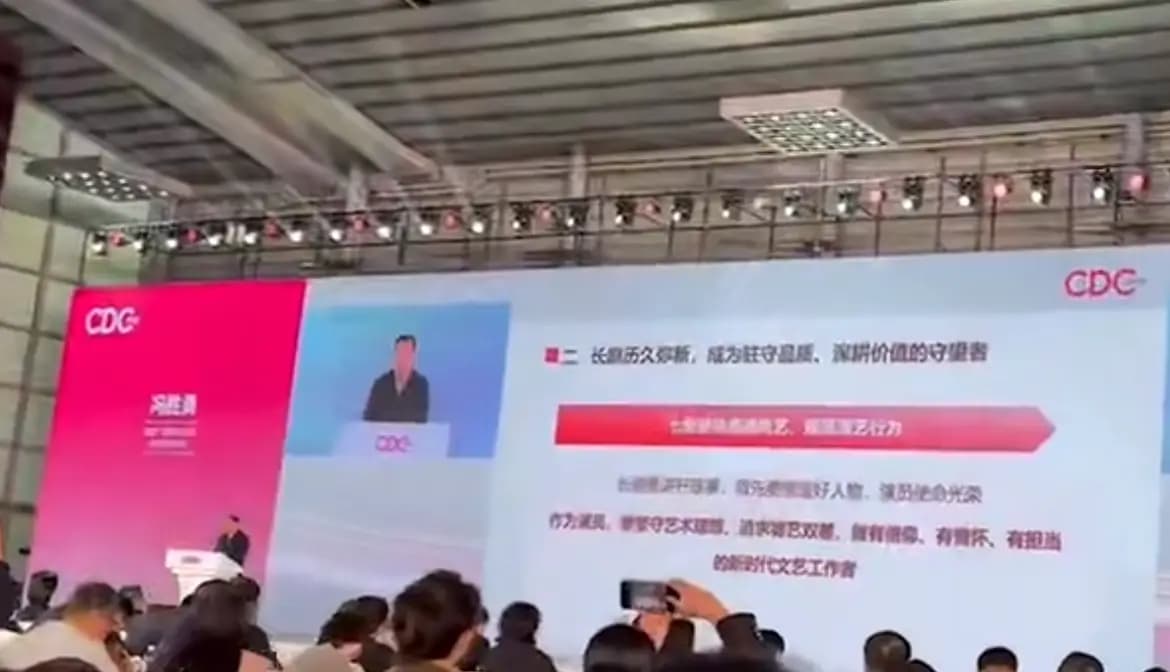
LayarHijau – China’s film and television industry is once again in the spotlight following a striking statement made during the China Television Production Industry Conference 2026 on March 13. At the event, Wang Ran, CEO of YiKai Capital, outlined sweeping changes that could reshape actor compensation and the structure of the entertainment industry in the coming years.
His remarks about potential adjustments to actor pay quickly sparked widespread discussion online. The topic of “structural changes to top actors’ salaries” rapidly climbed trending charts, reportedly surpassing 500 million views.
Next articles


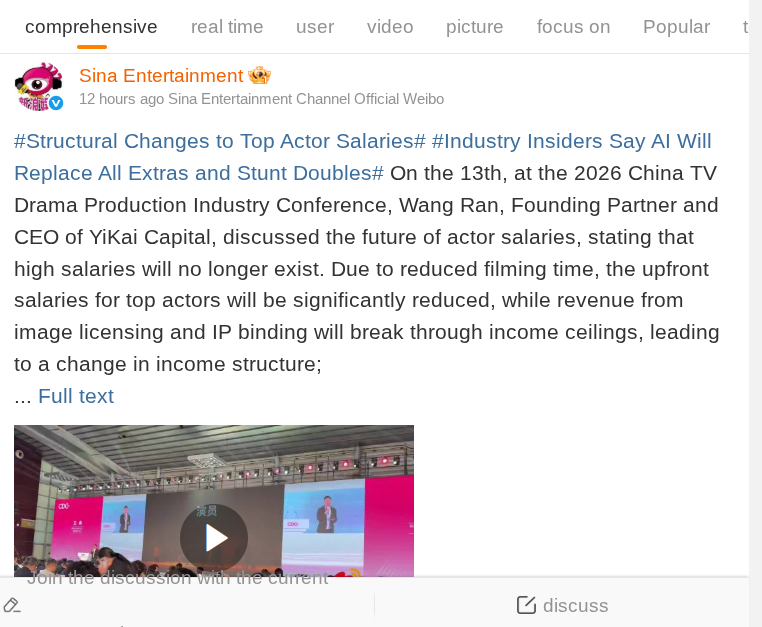
During his presentation, Wang Ran stated that the compensation structure for actors is likely to undergo major adjustments. The upfront fees typically paid to top-tier actors before production begins may be significantly reduced, potentially dropping by as much as 70 percent from previous standards.
According to him, one of the main reasons behind this shift is the rapid development of production technologies that allow filming schedules to be shortened considerably. With technological support improving efficiency on set, production cycles can now be completed faster than before.
As a result, actors’ income structures may shift toward backend revenue models. Instead of relying primarily on large upfront payments, actors could earn more through profit-sharing mechanisms tied to a project’s performance.
These income streams may include intellectual property licensing tied to their characters, revenue-sharing from distribution and streaming, as well as commercial collaborations linked to the popularity of the work.
This approach is expected to change the traditional “fixed-price” model that has long dominated actor contracts. Under the proposed system, actors’ earnings would be more closely tied to how well a project performs. If a drama or film becomes a major hit, their income could increase accordingly. Conversely, if the project fails to attract audiences, the financial returns would also be lower.
Many industry insiders see this adjustment as an important step toward addressing long-standing controversies surrounding extremely high actor salaries. The new structure could also better align actors’ interests with the overall success of the productions they participate in.
Beyond the issue of actor compensation, Wang Ran also discussed the growing impact of artificial intelligence on the entertainment industry. He suggested that AI technology could significantly reshape job structures across film and television production.
As AI systems continue to mature, certain types of roles—including mid-level supporting actors, background performers, and stunt doubles for repetitive actions—could increasingly be replaced by digital alternatives.
AI-generated performers offer several advantages from a production standpoint. They require no salaries, carry no risk of personal scandals, and can theoretically operate around the clock during production.
In some cases, AI-driven projects can be produced at dramatically lower costs. Reports suggest that AI-generated short dramas may cost as little as one two-hundredth of the budget required for traditional productions featuring human actors. The technology is also capable of generating digital characters that can perform movements and expressions tailored to a script’s needs.
These developments have already raised concerns among actors. Veteran Chinese actor Wang Jinsong has previously noted that AI-generated video is becoming increasingly difficult to distinguish from real footage. Meanwhile, Hollywood actor Nicolas Cage has criticized AI performances, arguing that they lack the emotional depth that human actors bring to their roles.
The changes discussed at the conference could also reshape how newcomers enter the entertainment industry. Wang Ran explained that the traditional career path—starting with small roles or background appearances—may become far less common in the future.
Instead, aspiring actors may need to first build their own personal influence through social media platforms such as Xiaohongshu and Douyin. By cultivating a strong following and personal brand online, newcomers could improve their chances of attracting attention from producers and creators of major intellectual property projects.
In other words, the industry logic may gradually shift from “gain opportunities first, then become famous” to “build influence first before receiving major opportunities.”
At the same time, government regulations are tightening to bring more balance to the industry. Current policies stipulate that total actor salaries in a production cannot exceed 40 percent of the overall production budget. In addition, the lead actors’ pay cannot account for more than 70 percent of the total actor compensation.
These measures are also accompanied by stricter oversight targeting non-transparent contracting practices, including the use of so-called “dual contracts,” which previously sparked major controversies in the entertainment sector.
Ultimately, these changes are seen as part of a broader effort to return the industry’s focus to storytelling and production quality. With lower upfront costs for top actors, more funding could potentially be allocated to script development, set construction, and visual effects.
While the rapid expansion of AI introduces new challenges for many professionals in the industry, it also lowers the barriers to production, allowing smaller creative teams to participate in content creation.
Looking ahead, many observers believe the future of film and television will likely involve a collaborative model between humans and technology. AI may handle standardized and repetitive tasks, while human actors remain essential for delivering emotional depth, complex characterization, and the kind of storytelling that machines still struggle to replicate.