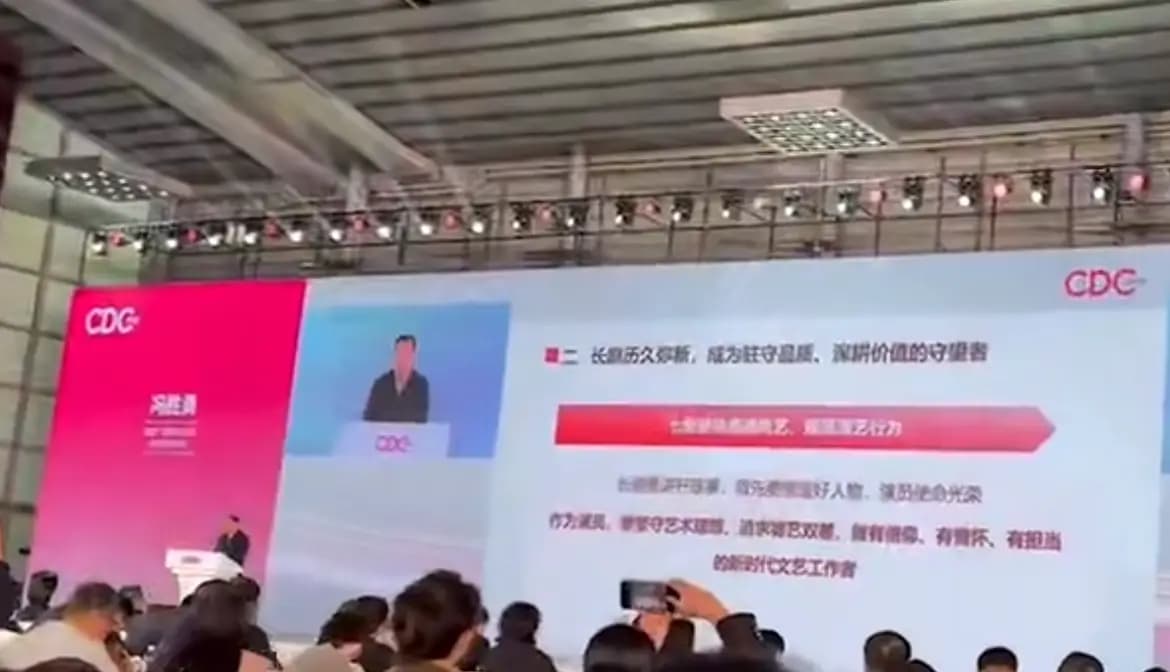
LayarHijau – China’s entertainment industry has once again drawn widespread attention after a new regulation regarding actor credit order in films and television dramas was introduced. During the 2026 China Television Production Industry Conference held in March, authorities announced a policy that changes how actors’ names must appear in production credits.
The new rule issued by the National Radio and Television Administration requires all film and television productions to list actors using their real names as stated on their official identification cards. Stage names, aliases, or other alternative names can no longer be used as the basis for credit listings.

In addition, the order of actors’ names will no longer be determined by popularity or star status. Instead, names must be arranged according to the number of strokes in the actors’ surnames in Chinese characters. The regulation also bans the use of vague titles such as “special starring” or “guest starring,” which have often appeared in credits in the past.
The announcement quickly sparked intense discussion online. Two related topics—new credit order rules from the broadcasting regulator and a comparison list of actors’ real names and stage names—rapidly became trending topics on Chinese social media, each reaching hundreds of millions of views.
One reason the regulation attracted such strong attention is that the requirement to use real names has revealed many actors’ birth names that were previously unfamiliar to the public. As a result, internet users began compiling lists comparing celebrities’ stage names with their real names.
These lists include actors from multiple generations in China’s entertainment industry, ranging from top stars to well-known character actors. In several cases, the contrast between stage names and real names surprised many netizens.
One example frequently discussed online is popular actress Yang Zi. Her real name is Yang Niao (杨旎奥). The name was chosen by her father with the hope that China would successfully host the Olympic Games. However, because the character “旎” is relatively uncommon and often mispronounced, she later adopted the simpler and more recognizable stage name Yang Zi.
Another widely discussed example is actor Ren Jialun, whose real name is Ren Guochao. The name was given by his father, a martial arts coach, who hoped his son would surpass those around him. Later, his management team changed it to Ren Jialun because it was considered more suitable for the gentle image he presents on screen.
Several other names have also drawn attention from the public. Actress Bai Lu is known to have the real name Bai Mengyan, while actor Luo Yunxi was born with the name Luo Yi. These original names carry different tones and styles compared to the stage names widely recognized by audiences.
As the comparison lists spread widely across the internet, discussions among netizens have continued to grow. Many people are intrigued by the stories behind these names, which often reflect the hopes and wishes of family members at the time the actors were born.
Some netizens have also pointed out that adopting a stage name is not simply a trend. In many cases, actors change their names because their original names may be difficult to read, carry unfortunate homophones, or do not match the public image they want to build in the entertainment industry.
For instance, actress Xin Zhilei was originally named Xin Lei. The pronunciation of her original name sounds similar to a phrase meaning “a tired heart,” which led to the addition of the character “Zhi” to create the stage name Xin Zhilei.
Another example is actress Zhang Yuqi, whose birth name is Zhang Shuang. The name change was reportedly made to avoid awkward wordplay in advertising contexts.
Amid the discussion, younger actors have also attracted attention. Actress Zeng Shuangyi previously used the stage name Li Chengxi when she first entered the entertainment industry. She has since chosen to return to her real name, saying she no longer wants to follow trends but instead prefers to present herself as she truly is.
Many observers believe the discussion surrounding actors’ real names reflects broader changes in China’s entertainment industry. With credits now arranged by surname strokes and the requirement to use real names, the competition that once revolved around star status and popularity may gradually shift back toward the quality of productions and the actors’ performances.
At the same time, the public conversation about real names also reveals a more personal side of celebrities. Stage names often serve as professional identities that carry dreams and fame, while real names are the original gifts from their families, holding the simplest hopes and expectations from the moment they were born.
As the new rule is gradually implemented across the industry, many believe China’s drama and film sector may move toward a more structured and transparent system. Meanwhile, the stories behind actors’ real names have unexpectedly become a warm and fascinating topic for audiences to explore.